At a glance
- Around 140,000 people live in Torbay.
- More than one in four residents are aged 65 and over.
- The population aged over 65 is expected to continue growing.
- Health inequalities continue to affect some communities more than others.
Torbay is home to around 140,000 residents and has one of the oldest population profiles in the South West. More than a quarter of people living in Torbay are aged 65 and over, and this proportion is expected to continue growing over the coming decades. This creates increasing demand for health, social care and community support services, making it more important than ever that people can access the right support at the right time.
| Year | Aged 0 to 19 | Aged 20 to 64 | Aged 65+ |
|---|---|---|---|
| 2024 | 20% | 53% | 27% |
| 2029 | 18% | 52% | 30% |
| 2034 | 16% | 51% | 32% |
| 2039 | 15% | 51% | 34% |
| 2044 | 15% | 51% | 34% |
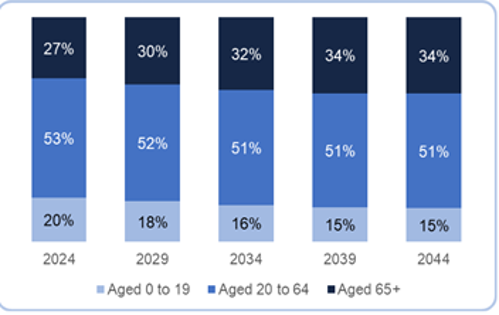
Torbay is home to around 140,000 residents and has one of the oldest population profiles in the South West. More than a quarter of people living in Torbay are aged 65 and over, and this proportion is expected to continue growing over the coming decades. This creates increasing demand for health, social care and community support services, making it more important than ever that people can access the right support at the right time.
Life expectancy in Torbay is around 79 years for men and 83 years for women. However, significant inequalities remain, with people living in the most deprived communities experiencing shorter lives and poorer health outcomes. Many people also spend a significant number of later years living with ill health, highlighting the importance of early intervention, prevention and support.
Ethnic groups in Torbay
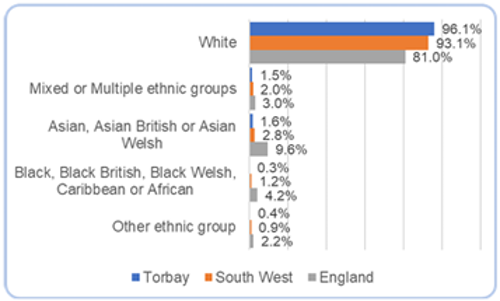
Torbay has a higher percentage of people in the White ethnic group than the South West and England. The percentages for the other ethnic groups are lower in Torbay than in the South West and England.
| Ethnic group | Torbay | South West | England |
|---|---|---|---|
| White | 96.1% | 93.1% | 81.0% |
| Mixed or Multiple ethnic groups | 1.5% | 2.0% | 3.0% |
| Asian, Asian British or Asian Welsh | 1.6% | 2.8% | 9.6% |
| Black, Black British, Black Welsh, Caribbean or African | 0.3% | 1.2% | 4.2% |
| Other ethnic group | 0.4% | 0.9% | 2.2% |
Torbay's population is becoming increasingly diverse, particularly among younger age groups. At the same time, population growth, an ageing population and increasing levels of complex health need are placing greater demand on health and social care services.
These challenges shape how Adult Social Care plans and delivers support. Our priority is to help people remain independent, connected and well for as long as possible. This includes supporting unpaid carers, reducing loneliness and isolation, promoting wellbeing and ensuring people can access the right information, advice and support when they need it.
What does this mean for you?
As more people live longer and develop complex health and care needs, demand for support is increasing. We are working to help people stay healthy, independent and connected to their communities for as long as possible by investing in prevention, supporting unpaid carers, strengthening community services and improving access to information, advice and support. We also continue to work with partners to reduce inequalities and improve outcomes for people across Torbay.
If Torbay were a village of 100 people
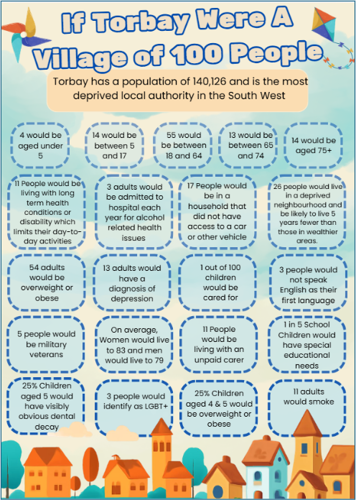
If Torbay were represented as a village of 100 people:
Age
- 4 people would be aged under 5
- 14 people would be aged between 5 and 17
- 55 people would be aged between 18 and 64
- 13 people would be aged between 65 and 74
- 14 people would be aged 75 or over
Health and wellbeing
- 11 people would be living with a long-term health condition or disability that limits their day-to-day activities
- 54 adults would be overweight or obese
- 13 adults would have a diagnosis of depression
- 3 adults would be admitted to hospital each year for alcohol-related health conditions
- 25% of children aged 4 and 5 would be overweight or obese
- 25% of children aged 5 would have visible dental decay
Housing and deprivation
- 17 people would live in a household without access to a car or other vehicle
- 26 people would live in a deprived neighbourhood and would be likely to live five years fewer than people in wealthier areas
Children and education
- One out of 100 children would be cared for
- One in five schoolchildren would have special educational needs
Work and community
- 11 people would have an unpaid caring fe expectancy
- 5 people would be military veterans
- 3 people would not speak English as their first language
- 3 people would identify as LGBT+
Life expectancy
- Women would live to an average age of 83
- Men would live to an average age of 79
More in About the council
- How the council works
- Councillors
- Leader of the Council
- Get in touch
- Voting and elections
- Consultations
- Finance and budgets
- Plans, policies and strategies
- Information and data
- Civic Mayor
- Pay an invoice
- Report fraud within or against the council
- Audit
- Achievements, Honours and Awards
- Climate Change
- Our Performance
- Greener Way for Our Bay
- Customer Services and Call Centre