Consultation on the future management of Berry Head National Nature Reserve
This page provides background information to inform public consultation about the future management of Berry Head National Nature Reserve (NNR). Berry Head is of great nature conservation, cultural, and historical significance and this consultation will help inform the long-term, management of Berry Head.
The consultation process is being carried out on behalf of Torbay Council and SWISCo.
Berry Head NNR is a much-loved headland situated on the beautiful Devonian limestone coast of south Devon, just outside Brixham. The area is important for its ecological, landscape, and historical interest.
However, Berry Head is subject to a complex range of pressures. These pressures are having a negative impact on the site. We are therefore seeking views on the future, integrated management of Berry Head NNR from all interested parties to ensure a thriving place for nature and people, where heritage is valued and protected.
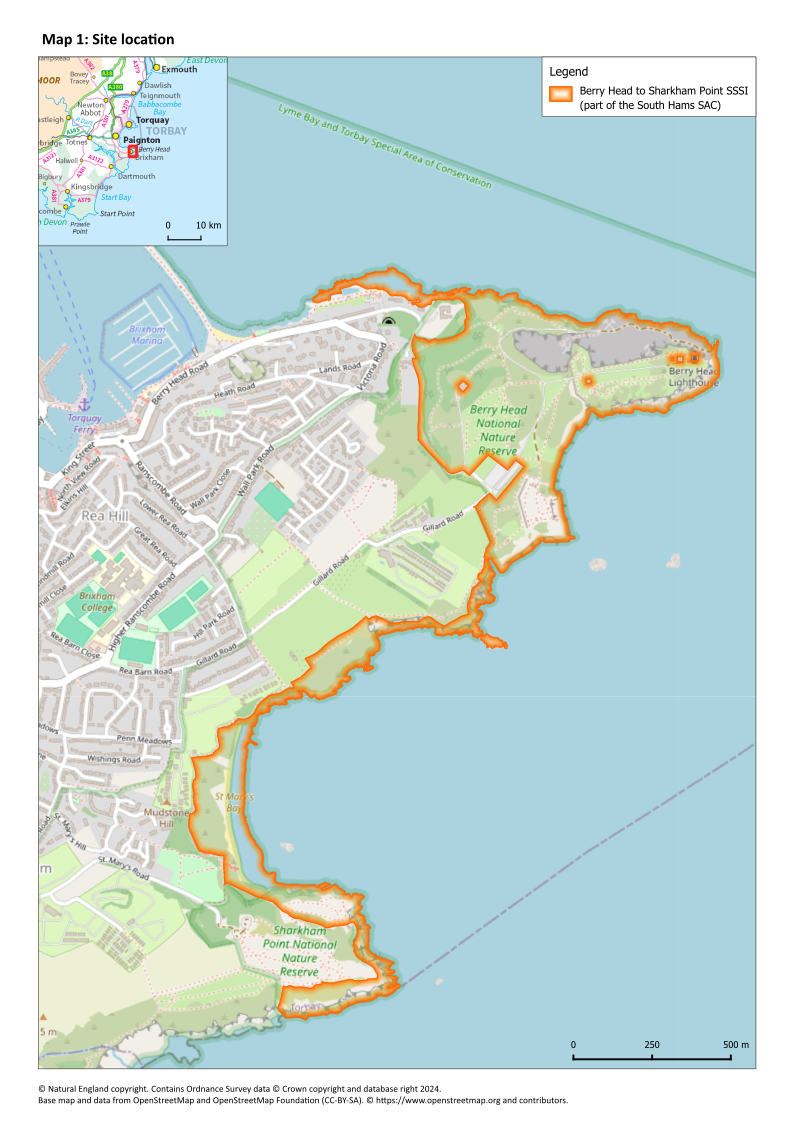
Map 1: Site location
Map showing the site location of Berry Head to Sharkham Point Site of Special Scientific Interest (part of the South Hams Special Area of Conservation).
Natural England copyright. Contains Ordnance Survey data Crown copyright and database right 2024.
Base map and data from OpenStreetMap and OpenStreetMap Foundation (CC-BY-SA). https://www.openstreetmap.org and contributors.
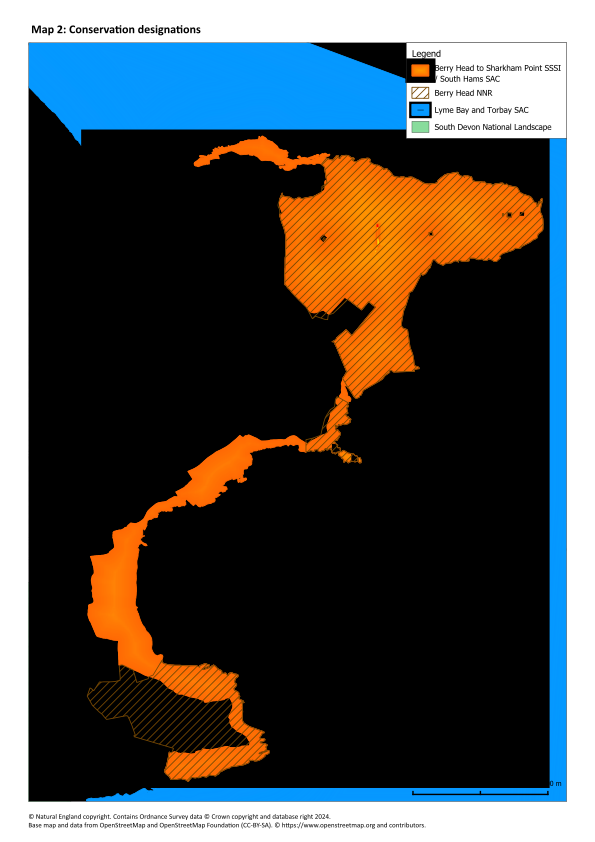
Map 2: Conservation designations
Map showing the nature conservation designations at Berry Head and Sharkham Point:
- South Devon National Landscape
- Lyme Bay and Torbay Special Area of Conservation
- Berry Head NNR
- Berry Head to Sharkham Point Site of Special Scientific Interest (part of the South Hams Special Area of Conservation)
Natural England copyright. Contains Ordnance Survey data Crown copyright and database right 2024.
Base map and data from OpenStreetMap and OpenStreetMap Foundation (CC-BY-SA). https://www.openstreetmap.org and contributors.
Heritage
Archaeological finds from Berry Head indicate occupation from the Neolithic onwards. The imposing Napoleonic forts, dating from the late 18th to early 19th centuries, were built from stone quarried on the site. They are considered some of the best-preserved remains from this period in Britain and are Scheduled Monuments.
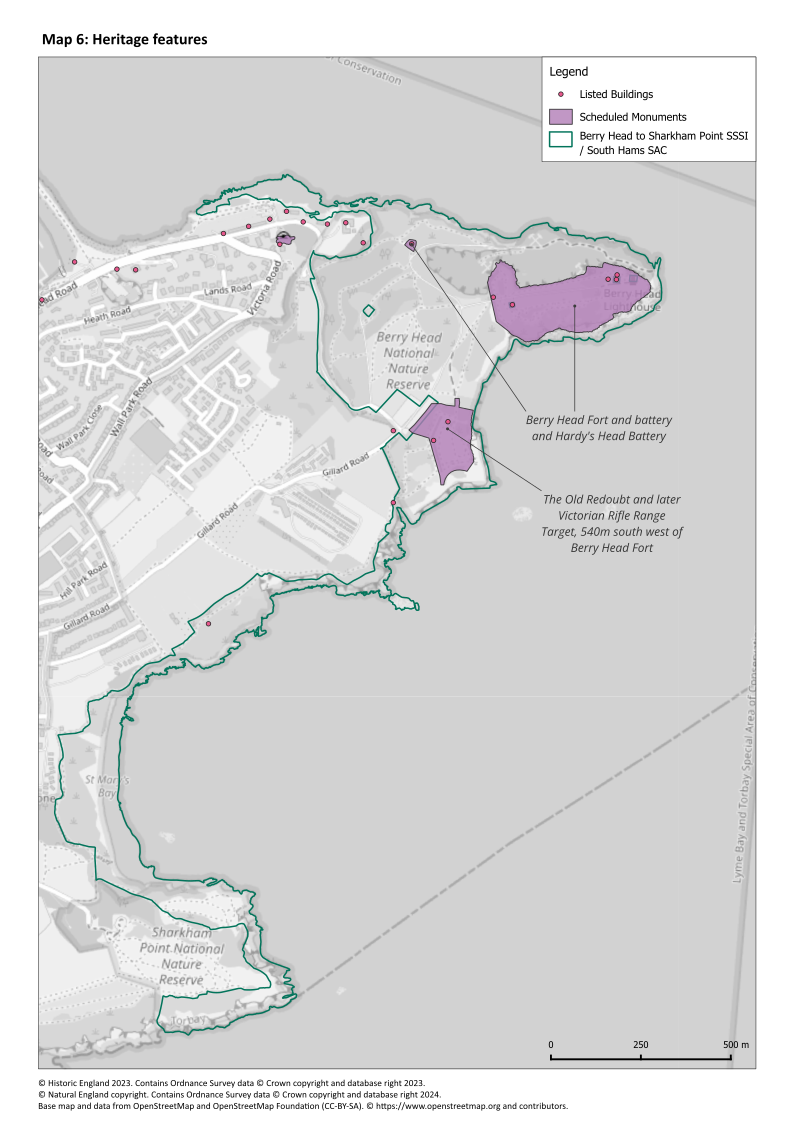
Map 3: Heritage features
Map showing the location of listed buildings and Scheduled Monuments inside the Berra Head to Sharkham Point Site of Special Scientific Interest.
The Scheduled Monuments are:
- Berry Head Fort and battery
- Hardy’s Head Battery
- The Old Redoubt and later Victorian Rifle Range Target, 540m south west of Berry Head Fort.
Natural England copyright. Contains Ordnance Survey data Crown copyright and database right 2024.
Base map and data from OpenStreetMap and OpenStreetMap Foundation (CC-BY-SA). https://www.openstreetmap.org and contributors.
Access
In addition to its important ecological and historical interest, the area is valued by local people and a range of user groups. People primarily visit for walking (with and without dogs), as well as for wildlife watching, fishing, sight-seeing and other activities. Most people travel by car, but many also arrive on foot from Brixham and via a number of footpaths, including the South West Coast path.
Wildlife
Berry Head is home to wonderful wildlife of national and international significance. The mixture of limestone grassland, vegetated sea cliffs, caves, limestone heath, and scrub provide a range of habitats for many special species. The variety and importance of Berry Head’s wildlife is reflected by the site’s multiple designations, being a National Nature Reserve, notified as the Berry Head to Sharkham Point Site of Special Scientific Interest (SSSI), and contributing to the South Hams Special Area of Conservation (SAC).
Some of the rare and special species present at Berry Head to Sharkham include: Cirl Bunting, Small Hare’s-ear and Greater Horseshoe Bat.
Issues and pressures
However, Berry Head is experiencing a range of pressures, all against a background of the changing climate. These pressures include:
Nutrient enrichment
The grassland and heathland are naturally low-nutrient habitats. Eutrophication (nutrient enrichment) via dog fouling degrades the habitats, reducing the diversity of species as they become outcompeted by more vigorous vegetation.
Trampling and physical damage
Whilst some of the rare species require short vegetation and some bare ground, the degree of trampling is having a detrimental impact on sensitive areas.
Scrub encroachment
Where scrub encroaches onto previously open areas of grassland and heathland, it ultimately changes the habitat and leads to the loss of characteristic species. Scrub can also damage heritage features.
Bird disturbance
Disturbance by people and dogs has been found to induce fear, reduce foraging time, and cause nest abandonment. Ground-nesting birds are particularly vulnerable.
Future management
Future management will support the continued improvement of the site to meet the obligations of its designations and secure a nature-rich Berry Head where people and heritage are valued.
Management will need to include:
- Scrub management;
- Vegetation management;
- Grazing; and
- Trampling and the reduction of nutrient enrichment.
Scrub management
Continuing rotational scrub management will ensure open habitats are not encroached upon whilst retaining areas of scrub to provide vital resources for birds and invertebrates, offering nesting, foraging, and sheltering opportunities.
Clearance from areas of the Scheduled Monuments will also help protect the heritage interest of the site.
Scrub management can be carried out manually or using flails and scrub cutters. The use of heavier machinery may be limited on steep slopes although robotic mowers can sometimes be used.
Once areas of scrub have been cleared and the resulting brash removed from the site, ongoing grazing or cutting can be used to ensure the restored areas remain open.
Vegetation management
In areas where vegetation has become overgrown, contributing to nutrient enrichment and a reduction of wildlife diversity, vegetation cutting will be carried out. This may include meadow management of areas of the site, with seasonal vegetation cutting.
Grazing
Berry Head was traditionally grazed by livestock. Grazing has been fundamental in creating conditions for the habitats and species we value at the site today. Reintroduction of grazing will control the growth of scrub and saplings and to help increase habitat structural diversity, reducing more competitive species and allow space for the rarer species. Grazing can also be an important follow-on management after scrub has been removed.
Grazing will be using a combination of sheep and cattle. Sheep and cattle graze in different ways and, in combination, can create more varied habitat across the site.
Sheep nibble rather than pull vegetation, and are adept at creating a shorter sward, although they are much less effective at grazing tall vegetation. They will be able to graze on steep slopes and near cliffs where cattle may not.
Cattle grazing results in a varied, tussocky, sward, offering various niches for different invertebrates. Cows can cope with tall vegetation, whilst their trampling creates small pockets of bare ground. Their dung is important for beetles which, in turn, are vital for Berry Head’s Greater Horseshoe Bats.
Trampling and eutrophication reduction
Running regular engagement events and developing a community of volunteers will help ensure the site is in a good condition for people, heritage, and wildlife. Clear signposting and low rope fencing could help aid people with staying on the paths to reduce the impact on surrounding habitats. Providing clear signage and dog waste bins could contribute to reducing dog fouling and the resulting eutrophication.
Consultation
To help inform the future management of Berry Head and ensure a thriving place for nature and people, where heritage is valued and protected, we are keen to hear your views.
A public drop-in event will be held at the Berry Head Visitors Centre with guided walks on Tuesday 28 April 2026 between 09.30am and 12.30pm.
More information about how to share your views can be found on the consultation page of our website.
Contact Engagement
More in About the council
- How the council works
- Councillors
- Leader of the Council
- Get in touch
- Voting and elections
- Consultations
- Finance and budgets
- Plans, policies and strategies
- Information and data
- Civic Mayor
- Pay an invoice
- Report fraud within or against the council
- Audit
- Achievements, Honours and Awards
- Climate Change
- Our Performance
- Greener Way for Our Bay