Hope does not come from harmony alone- perspectives from a newly qualified social worker
As a newly qualified social worker, I am still developing my professional identity. I am learning how to hold the balance between theory and practice, between what I was taught and what real life continues to teach me every day.My training gave me a strong foundation in boundaries, ethics and safeguarding, and those remain essential. But my lived experiences have added another layer to that learning. They have helped me understand that professionalism is not just about distance or neutrality, but about authenticity, compassion and knowing when it is appropriate to bring parts of myself into the work.
I have spent most of my adult life working in systems designed to support other people through crisis, loss and uncertainty, first within the healthcare sector and now within social work. I am used to being the person who listens, who explains processes, who helps families navigate services at some of the hardest points in their lives. What I was not prepared for was how it would feel to sit on the other side of those same systems.
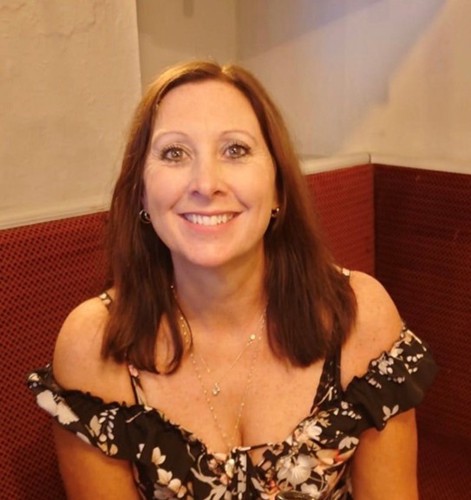
After losing my daughter some years ago, and recently receiving my own cancer diagnosis, I experienced first-hand what it means to rely on services not as a professional, but as a person in pain, fear and grief. Returning to work while undergoing chemotherapy, I found myself supporting a family who had lost a woman who was both a mother and a daughter, unexpectedly. Those two worlds, personal and professional, collided in ways that fundamentally changed how I understand care, hope and the idea of co-building altogether.
In those moments, both as a professional and as someone receiving support myself, what mattered most was not policy, performance frameworks or service pathways. It was tone of voice. It was whether someone took time to sit with uncertainty. It was whether I felt seen as a whole person rather than a ‘case’, a diagnosis, or a task to be completed. These experiences have shaped how I now practise. Rather than seeing my life experiences as something separate from my role, I now see them as part of how I am shaping my professional identity. They influence how I listen, how I sit with distress, how I understand families’ fears, and how I hold hope when things feel overwhelming.
When families see that I can be unwell and still show up, still want to help, still believe in making a difference, it offers something beyond professional support. It offers a form of hope grounded in shared humanity. When they learn that I have navigated the education system for my autistic son, or that I carry grief into my everyday life, it creates a relationship built not on roles or power, but on respect, trust and connection.
In that sense, I am co-building not only with the people I support, but also with myself. My professional identity is not fixed; it is evolving, informed by education, reflection, and the realities of being human in a role that is fundamentally about human relationships.
And for me, this is where hope and harmony truly begin. Not in policies or structures, but in the courage to be present, to be real, and to build something meaningful together, one relationship at a time.
One of the biggest lessons I am learning as a newly qualified social worker is that co-building is not about having the right answers, but about asking better questions. It is about being curious rather than certain, and recognising that families are experts in their own lives in ways that systems can never be.
I am also learning that power is always present in social work, whether we acknowledge it or not. Decisions, thresholds and assessments shape people’s futures. Co-building hope means being honest about that power, using it responsibly, and creating space for families’ voices to genuinely influence the process, not just be recorded within it.
I have also learned that social work does not happen in isolation. It exists within teams, partnerships and wider systems of support. Our combined skills, knowledge and experiences are what make meaningful change possible. I regularly seek advice and guidance from colleagues, peers and professionals across different agencies, and one of the greatest lessons for me has been understanding that asking for help is not a weakness, but a professional strength.
Recognising when I do not know something, and being willing to learn from others, has been just as important as any formal training. It has taught me that co-building is not just about working alongside families, but also about learning to work openly, honestly and collaboratively with each other.
Working in Torbay has shown me the importance of seeing the whole system, not just individual needs. Families are navigating poverty, housing pressures, health inequalities and educational challenges, often all at once. Co-building hope in this context means working across services, listening to communities, and recognising that lasting change rarely comes from one professional or one intervention alone.
Working together is not always harmonious. It involves disagreement, challenge, uncertainty and sometimes sitting with things that cannot be fixed quickly. But it is in that shared effort that real change happens. Not through perfect systems, but through people choosing to keep showing up, to keep listening, and to keep working alongside families even when the path is unclear.
For me, World Social Work Day is not about celebrating a profession in isolation. It is about recognising the collective strength of communities, families and practitioners who continue to co-build hope in difficult circumstances. It is about valuing small victories, meaningful connections and moments of trust that may never appear in performance data, but make a lasting difference in people’s lives.
Hope does not come from harmony alone. It comes from perseverance, compassion and the belief that even in the most complex situations, something positive can still be created together.
And that, for me, is what makes this work worth celebrating.
Contact Family Information Service
More in Children and families
- Services and support
- Private fostering
- Peninsula Commissioning and Procurement Partnership
- Celebration Event May 2022
- Our Ways of Working
- Fostering
- Home learning environment and early years
- UNICEF Child Friendly Community
- Participation groups for young people
- Torbay Safeguarding Children Partnership Training
- Corporate Parenting
- Care Experienced local offer
- Corporate Parenting Strategy 2025/28
- Ofsted inspection 2026
- World Social Work Day 2026
- Best Start in Life Plan