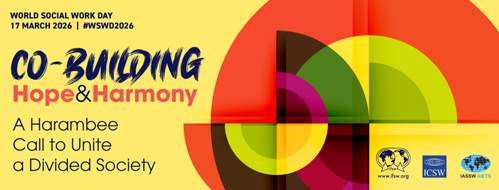
When the theme for World Social Work Day 2026 - “Co‑Building Hope and Harmony: A Harambee Call to Unite a Divided Society” - was announced, I have to admit that at first, I struggled. I do feel that I have to resist getting drawn in and encompassed by the images of divisiveness, inequality and oppression that we are seeing currently. The world feels to me more divided than ever and perhaps edging towards a darkness that I do find unsettling.
I asked myself what can I do about this- one person, one social worker? How can I answer the Harambee call? In reflecting on that question I was reminded of this passage:
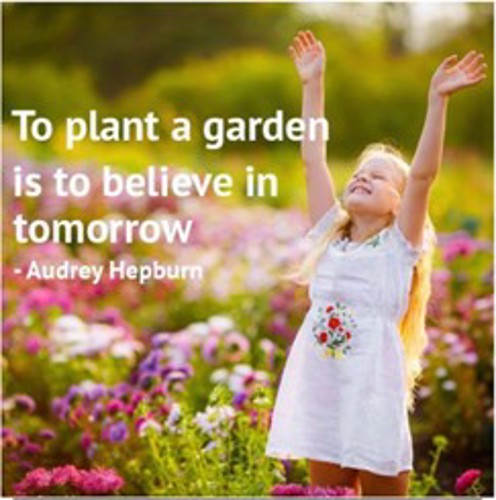
Imagine a thriving garden filled with many flowers and plants, a tranquil place of aroma and colour where everything blossoms and flourishes. Envisage what conditions this oasis would require, what it would take to nurture the plants, to develop their fullest potential. And then imagine that, instead of plants, the garden is filled with children , all different, all unique all rich in potential. What conditions would they need to grow and develop? (Eichsteller and Holtoff cited in Cameron and Moss(2011) p33.
This question transformed my early student practice in a small South Wales Local Authority, and it still anchors my practice today. The language of that passage is beautiful, but its challenge is what continues to resonate: children do not thrive because of a single professional’s effort. They flourish when the ecosystem around them works in harmony.
When we truly examine the “conditions” children need, we see clearly that social work cannot stand alone. We cannot safeguard, support, or transform family life without trust, shared values, shared accountability — and humility. Green fingers are not enough; nor is professional expertise in isolation. We cannot work alone to affect change but as individual practitioners we can and do bring children, families, professionals and communities together. The shared endeavour impactful.
A shift is happening. We are listening more closely to children and young people. We are inviting wider families into decision‑making spaces. We are strengthening collaboration with multi‑agency partners. And now, with the Families First reforms placing co‑production at the centre, we are being asked to go further. In this, we are answering the harambee call.
Yes, it will be complex. But complexity has never deterred us — it has defined us. These reforms offer the closest opportunity we have had to achieve genuine, system‑wide co‑production. The pressure will be real, and the timeframe tight, but we must resist the temptation to settle for tokenistic engagement. True co‑production takes time, resources, and courage. It asks us to create spaces where every voice — especially those loving, caring for, and protecting a child — is valued equally. For me, this is seminal. At last, we have a reform that recognises the equal worth of the perspectives surrounding a child. If we approach this change with care, patience, and passion, we can build something powerful: a shared hope that connects everyone who steps into the social care space.
And if we succeed, our collective “community gardening” will not be just metaphorical.
Reference: Cameron, C. and Moss, P. ( 2011) Social Pedagogy and Working with Children and Young People; where care and education meet. Jessica Kingsley Publishing; London
Contact Family Information Service
More in Children and families
- Services and support
- Private fostering
- Peninsula Commissioning and Procurement Partnership
- Celebration Event May 2022
- Our Ways of Working
- Fostering
- Home learning environment and early years
- UNICEF Child Friendly Community
- Participation groups for young people
- Torbay Safeguarding Children Partnership Training
- Corporate Parenting
- Care Experienced local offer
- Corporate Parenting Strategy 2025/28
- Ofsted inspection 2026
- World Social Work Day 2026
- Best Start in Life Plan