Sections
Contents
- Part Two: Our case for change
- Criteria 1: Establishing a single tier of government
- Criteria 2: Efficiency, capacity and withstanding financial shocks
- Criteria 3: High quality and sustainable public services
- Distinct local needs
- Promoting a unified approach
- Maintaining and improving crucial services
- Case study: Improving Restorative Practice in Torbay
- Case study: Torbay Council - Homelessness Prevention
- Transformation and integration
- Existing shared services
- Further collaboration and joint commissioning
- Case study: Torbay Council - Safeguarding the future of local libraries
Our case for change
In the second part of our proposal we set out how our four unitary solution for Devon will best meet the Government’s criteria for local government reorganisation:
Criteria 1: Establishing a single tier of local government
Proposals should:
- create a single tier of local Government across the area
- be based on sensible geography and economic viability
- be supported by robust evidence and expected outcomes.
Criteria 2: Efficiency, capacity and withstanding financial shocks
New councils should:
- improve efficiency and resilience
- be the right size to improve financial stability.
Proposals should show how transition costs and existing council debt will be managed.
Criteria 3: High quality and sustainable public services
Proposals should show how reorganisation will:
- enhance public service delivery
- avoid fragmentation
- improve outcomes in key areas like social care, children’s services, and public safety.
Criteria 4: Working together to understand and meet local needs
Proposals must show how councils have meaningfully collaborated and engaged. They will reflect community identity and show how we have addressed public concerns.
Criteria 5: Supporting devolution arrangements
Proposals should enable devolution. They should give details of how governance structures will adapt to support strategic authorities.
Criteria 6: Stronger community engagement and neighbourhood empowerment
Building on existing arrangements, proposals will include strong community involvement and neighbourhood empowerment.
Criteria 1: Establishing a single tier of Government
Our proposal sensibly reflects Devon’s geography, topography and ways of life – three coherent economic areas aligned to key corridors and one larger rural council. It provides a credible single tier local Government solution to Devon’s unique mix of coastal, urban and rural communities.
Torbay, Plymouth and Exeter will be empowered to lead on urban priorities while the new Rural Devon Coast and Countryside Council can focus on the distinct needs of dispersed rural communities, market towns and villages.
The proposed solution reflects functional economic areas, travel to work zones, and community identities, avoiding artificial boundaries that fragment service delivery. It makes sure that planning, housing, transport, and economic growth are aligned with how people actually live and work. It avoids fragmented governance that hinders housing delivery because it allows councils to plan across coherent housing markets and infrastructure corridors, rather than negotiating across disconnected jurisdictions.
This section addresses the Government’s first criteria for unitary local government, which looks to establish an effective and efficient single tier of local government for all of Devon.
Criteria 1a: Sensible economic areas, with an appropriate tax base, which does not create an undue advantage or disadvantage for one part of the area.
Criteria 1b: Sensible geography which will help to increase housing supply and meet local needs.
Criteria 1d: Effective structures to deliver outcomes for our communities.
We address criteria 1c – Proposals should be supported by robust evidence and analysis and include an explanation of the outcomes it is expected to achieve, including evidence of estimated costs/benefits and local engagement – throughout this proposal.
Coherent and strategic planning for growth
Our proposal provides a credible single tiered local government solution to Devon’s unique mix of coastal, urban and rural communities. Four functional areas avoids the remoteness of an oversized authority and the cost and fragility of multiple smaller councils.
This Devon-wide structure makes sure coherent and strategic planning for growth, housing and infrastructure across urban and rural contexts. Local government reorganisation (LGR) presents a unique opportunity to design a system that reflects Devon’s four functional economic geographies and will allow them to thrive. With streamlined governance, the new unitary councils can better serve their communities by speeding up housing development, upgrading infrastructure, and promoting inclusive economic growth county wide.
The model leverages the unique economic identities, strengths and connectivity of each area, enabling sustainable development and maximising the impact of Devon’s resources. It aligns how people actually live their lives, reflects travel to work and housing market areas, and enables services to be provided in ways that more proactively support growth, regeneration and access to health and social care.
Torbay has a strong economy with traditional sectors such as tourism, construction, fishing and healthcare as well as high growth sectors including advanced manufacturing, photonics and micro electronics, supported by the established Torbay Hi-Tech Cluster and the growing Torbay Creative Cluster. Although traditional sectors such as tourism are often lower paid seasonal employment, they are essential in supporting growth and the wider economy. To ensure the resilience of Torbay’s economy, we will continue to focus on driving economic growth through supporting high-growth and traditional sectors, creating spaces and support for businesses to develop such as through employment space at Torbay Tech Park and our business support programmes. By levering Torbay’s unique coastal setting to boost the economy and attract a strong workforce through improving education, training and affordability, Torbay can turn the challenges of the economy into opportunities for growth.
Plymouth is at the heart of the national defence, marine autonomy and wider growth ambitions for the South West region delivering long term opportunities for young people. This proposal provides a firmer foundation to drive forward the Government’s objectives within its Defence Industrial Strategy.
The proposed expansion of Plymouth City Council builds on the existing innovative strategic planning approach through the Plymouth and South West Devon Joint Local Plan, which already demonstrates successful collaboration across Plymouth and the communities of South Hams. The expanded council will deliver integrated and effective local governance to the people of Plymouth and the surrounding areas that already naturally function as part of the Plymouth housing and economic area.
Exeter is one of the fastest growing economies in the country, and the main growth hub for the South West, with specialisms in science, tech, big data, and significant assets, such as higher and further education institutions, which are vital to skills generation, innovation and productivity growth. 50% of Exeter’s workforce live outside of the city, so the connection between the city and its rural communities is vitally important.
Rural Devon is not merely a picturesque backdrop to the County and the south west region, it is a dynamic, resilient economy with national significance. Anchored by globally competitive sectors such as agri-tech, clean energy, and advanced manufacturing, rural Devon contributes £20.6 billion to the UK economy while driving innovation founded on place based strengths. Its natural capital is unmatched: from the biosphere reserves of North Devon to the productive farmland and coastline that support thriving food, drink, and tourism industries. These assets are leveraged by a growing ecosystem of small and medium sized enterprises, research institutions, and community enterprises that are pioneering sustainable practices and circular economy models.
Connectivity is improving, with strategic investments in digital infrastructure and transport links enabling rural businesses to scale and export. The region’s workforce is skilled, adaptable, and increasingly supported by targeted education and training aligned to local growth sectors.
Importantly, Devon is central to the UK’s transition to net zero, food security, and regional rebalancing. Its clean energy potential, including offshore wind and green hydrogen, positions it as a future energy hub. Its defence and aerospace supply chains, clustered around key sites, are vital to national capability.
A key consideration in defining unitary proposals is the ability to promote economic growth in the County. The fastest growing sectors across the region are around digital technologies, professional services, specialised manufacturing, environmental science, advanced engineering, and healthcare.
Recognising Devon’s distinctive identity and economic growth potential is vital to forging a path to a new economy that offers genuine opportunities for access and advancement to all residents. The principle of inclusive growth is central to our plans for the whole of Devon and the wider region.
Our configuration aligns with functional housing market areas and travel to work patterns around Exeter, the Plymouth Growth Area and Torbay as a compact coastal conurbation. It enables coordinated planning and delivery across strategic sites and infrastructure corridors, improving performance against the Housing Delivery Test and focusing scarce planning capacity where it has most impact. The approach creates simple, accountable footprints with clear responsibility for delivery.
Meeting the housing needs of our communities
Simply put – the four unitary solution reflects the needs of people across all of Devon. Its configuration is built around the principle that local government should be able to respond flexibly to where need and demand for services is highest. For Devon, this involves key focuses on adult social care, children’s services, housing, economic growth and regeneration, and public health.
Our proposal supports high quality, locality based services by implementing structures which best reflect the distinct profiles of our areas. It supports a more tailored service model which is responsive to the urban contexts of Exeter, Plymouth and Torbay and the rural context of Devon. It avoids unnecessary fragmentation by building on the proven track record of existing unitary councils serving Plymouth and Torbay, while making sure that the new unitary councils are operationally viable. It equitably distributes resources aligned to an even distribution of demand, with the aim of consistent services for all Devon residents.
With housing being a critical factor to improving the health and wellbeing of our residents, a single system of local government for Devon will enable better coordination of housing supply across the County, especially through the expanded Exeter and Plymouth boundaries.
Despite best intentions from all parties, the existing dynamics of local government can sometimes ultimately fail the people it serves. This proposal provides the opportunity to tackle piecemeal housing strategies that do not meet demand. The new configuration – by design rather than inherited geography – will align housing targets with infrastructure and employment planning, making sure delivery is both strategic and locally responsive. The four unitary solution represents a sensible geography that will help increase housing supply to meet local needs. Geography alone won’t solve the acute housing crisis those seeking a home in Devon face.
The 2023 Housing Delivery Test confirms that most Devon councils (except Torbay) have consistently exceeded their targets in recent years.
| Unitary | Total number of homes required | Total number of homes delivered | Housing Delivery Test measurement (Homes delivered/Homes required) |
|---|---|---|---|
| Expanded Exeter | 3,554 | 3,851 | 108% |
| Expanded Plymouth | 2,518 | 2,836 | 113% |
| Torbay | 1,549 | 1,024 | 66% |
| Rural Devon Coast and Countryside | 6,589 | 6,963 | 106% |
Despite progress, the Devon Housing Commission highlights the acute housing crisis in Devon, noting that while delivery is high, affordability and access remain problematic, especially in areas like Torbay and rural communities. Issues include acute shortages of affordable homes for both ownership and rent, a lack of social housing (with delivery rates below national averages) and the impact of short term lets on local housing supply.
The Commission’s recommendations for Devon include overcoming fragmentation, boosting affordable housing, and empowering local authorities. The proposed four unitary solution directly addresses these points by:
- Building on the work of the Devon and Torbay Combined County Authority (DTCCA) and creating governance structures that match economic, and housing geographies bespoke to Devon; providing a stepping stone towards a Mayoral Strategic Authority (MSA).
- Enabling strategic planning and delivery at scale, but with local responsiveness.
- Supporting targeted interventions in areas of greatest need.
- Enhancing accountability, financial resilience, and community engagement.
The Plymouth and South West Devon Joint Local Plan area has a strong track record of providing a housing supply to meet local needs. It has already delivered 113% against Government housing targets 2020-21 to 2022-23. The authority has been driving its Plan For Homes scheme, aiming to deliver 5,000 homes over a five year period on its current footprint, including more homes for social rent and low cost home ownership.
Despite success with demand outstripping supply, an extended boundary would help meet community need. Some 41% of residents in Plymouth currently live in either social or private rented homes in the council’s current boundaries despite strategies being deployed to address urban deprivation and stimulate economic growth.
The Plymouth Housing Market Area and Needs Assessment has demonstrated significant unmet housing needs in the sub-region. Both the Sherford and planned Woolwell urban extensions, located in South Hams, have been required primarily to meet housing needs in the city. Even with this development, there remains significant unmet need in the sub-region. Combined, these challenges highlight the need for strategic planning and integration to address the housing crisis in Plymouth and its surrounding areas.
Exeter faces rapid population growth (5.9% against the UK average of 3.8%) and increasing demand for affordable housing and sustainable transport. This proposal will enable the new Exeter Council to accelerate housing delivery, support its vibrant labour market, and invest in infrastructure that underpins both economic growth and the needs of its growing young professional and student population.
The Exeter Housing Market Area closely matches the local economic market area, both of which align with the growing travel to work area — the second largest in England after Cambridge. Cross district collaboration supports strategic planning beyond Exeter’s current administrative boundary, as shown by current development strategies. The Exeter Plan includes 14,000 new homes within the city by 2041, while Teignbridge and East Devon have designated areas on the city’s outskirts for 30,500 more homes. These neighbouring developments functionally extend the city, with many residents considering Exeter their home.
As a continuing authority, Torbay Council will be enabled to continue and further build its momentum around addressing urban deprivation and an ageing population with targeted regeneration and economic growth strategies. By tailoring investment and service delivery to local needs and industries, Torbay has demonstrated it is fiscally responsible and well positioned to unlock economic potential in the face of high deprivation levels and support sustainable housing development that meets the needs of its residents.
Analysis of the three baseline forecasts of the main forecasting houses (CE, OE and Experian) indicates a predicted 6,730 jobs growth in Torbay over the 2022 to 2040 plan period. Torbay’s Economic Development Needs Assessment suggests no uplift to the former minimum Local Housing Need as it stood at 2023 is considered necessary or necessarily desirable to support an explicit balance between jobs and homes.
Torbay’s most recent Housing and Economic Needs Assessment (2021) identifies a need for 720 affordable homes per year, reflecting acute local demand. However, delivery is constrained by limited viable land, strong environmental protections, and flooding risks.
Expanding Torbay’s boundaries into neighbouring areas such as South Hams or Teignbridge would not resolve these challenges, as those areas also face significant constraints.
Whilst Torbay’s Local Housing Need is high relative to its land supply, alternative solutions are being pursued. This includes a brownfield‑first strategy anchored in town centre regeneration, intensification of underused sites and our innovative Hotels to Homes programme, complemented by active homelessness prevention and specialist housing pathways. These measures provide a credible, locally led route to meet need whilst adhering to nationally significant environmental constraints.
The new Rural Devon Coast and Countryside Council would provide a strategic platform for economic growth and housing delivery tailored to the unique challenges of coastal, moorland, and agricultural communities. By aligning governance with local economic identities and needs, the model enables sustainable growth and makes sure that rural Devon can thrive alongside its urban counterparts, with housing solutions that reflect local demand and opportunity.
The council would work with the other three unitary councils to manage resourcing and skills gaps in planning that slow housing delivery. It would need to develop a strategy for housing and homelessness that is centred on its rural geography, using the best examples including the blueprint provided by the Devon Housing Commission, combined with a locally determined approach to needs. Community engagement via the locality model proposed will be essential to developing truly local understanding of housing need and delivering effective, tailored solutions.
The greatest development potential in Devon lies in the areas surrounding Exeter and the eastern fringes of Plymouth, where land supply and infrastructure can support larger scale growth. The four unitary solution, working in partnership through an MSA, enables Devon to direct growth to areas with capacity, while Torbay focuses on regeneration, affordable housing, and meeting specialist needs within its unique constraints.
Meeting Devon’s housing targets requires a strategic, county wide approach. The four unitary solution, underpinned by a Spatial Development Strategy led by the MSA, will enable coordinated plan making, infrastructure investment, and delivery across functional housing market areas. This approach aligns with Government criteria for “sensible geography” and makes sure that housing need is met through collaboration, not just boundary change.
Case study: How Torbay Council transforms Hotels to Homes
With little or almost no affordable housing available throughout Torbay, along with a lack of greenfield and brownfield sites, we needed to find another way to create affordable homes for our residents.
With the closure of large hotels in prime locations, we decided to work with developers to turn them into affordable housing for local key workers and those with the highest housing need.
Torbay has lots of hotels, often in lovely locations, that are no longer operating and have been left empty for long periods of time. Many of these buildings are from the Victorian era and are stunning properties that would make ideal living accommodation.
£3 million from our Levelling Up Partnership with Government helped us turn some of these ‘Hotels to Homes’ and bring affordable housing to those with the highest need.
Working together with the private sector, taking a turnkey approach, we have turned our first project around quickly, meeting extremely tight deadlines. We found a hotel in the centre of Torquay which already had planning permission and a developer who was keen to get the project started. By working with the developer and committing to buying all the accommodation in one go, both parties have saved on multiple legal fees, with no need for an estate agent, and the developer has a guaranteed buyer. We have also agreed to a bulk purchase discount.
Our involvement in this development has meant that we can achieve a higher standard of accommodation. This includes a fire suppression system, EPC Level B, low carbon heating, solar panels and electric vehicle charging points – as well as space for a shared garden.
What this old hotel has given us is 14 individual units comprising flatlets, one-bedroom flats, and two-bedroom flats. It accommodates single people, couples and families right in the centre of the town whilst also enjoying being a stone’s throw from our beautiful seafront and beaches.
This blueprint project was the first in our Hotels to Homes programme with further projects already underway. We are investing in our housing and our local people to give our residents somewhere they can truly call home.
Targeted service delivery
Each unitary council will be equipped to lead on place based investment and service integration, making sure that urban centres like Exeter, Plymouth and Torbay can drive innovation and productivity, while rural Devon benefits from tailored solutions to its distinct rural challenges. This structure avoids the risks of economic incoherence and diluted accountability that can arise from broader, less differentiated models or a one size fits all.
Under the four unitary solution each council will focus on its own demographic and service pressures whilst sharing and collaborating on key issues and services where this is a fiscal or rational demand. For example, Torbay and Plymouth will continue to directly address urban deprivation, health inequalities, and ageing populations through measures such as integrated care models and targeted regeneration. In Exeter, the new council would be uniquely positioned to respond to the city’s rapid population growth and its role as a regional economic powerhouse.
Targeted service delivery makes sure that councils can respond effectively to the distinct challenges and opportunities within their areas. It avoids the inefficiencies and mismatches of one size fits all governance because each authority can design and deliver services that reflect local demographics, economic conditions and community expectations. This leads to better outcomes for residents, more efficient use of public resources, and stronger accountability to local priorities.
For example, Torbay Council has commissioned a Multiple Complex Needs Alliance through an Alliance Agreement to better respond to and meet the needs of those who experience homelessness, drug and alcohol problems, and domestic violence or abuse.
By configuring services around people – some of the most vulnerable members of our community – rather than expecting them to navigate three different services results is collaborative provision. This means we understand what matters most to people who use the services while at the same time improving the experience, quality and outcomes of the integrated offer.
Plymouth’s comprehensive reablement programme is working to transform how Adult Social Care supports people to regain their independence. The programme focuses on remaining independent and effective self led life assessment, moving away from traditional service dependent models towards community based approaches that prevent escalation of need and reduce reliance on statutory services.
Through collaborative working between Livewell Southwest, Plymouth City Council’s Place Directorate, and other partners, the programme strengthens connections between what services can do for people and what individuals can see they could do differently. This approach aims to maximise independence and the efficiency of existing services whilst improving long term outcomes across reablement, community outreach, independence at home service, and technology enabled care.
Ensuring a fair and sustainable tax base
Each proposed unitary council has a balanced and sustainable tax base, avoiding undue advantage or disadvantage for any area whilst retaining Devon’s sense of place in both rural and urban areas. This supports financial resilience and equitable service delivery. It avoids fiscal imbalance that could lead to service cuts or unequal investment because each unitary is designed to have sufficient revenue capacity to meet local needs without over reliance on central Government support.
The four unitary solution has been specifically designed to align with the distinct needs of Devon’s communities. The Chief Financial Officers from Devon’s two current unitary councils have collaborated closely with their counterpart in Exeter and sought input from independent financial consultants. This partnership has ensured that financial assessments are robust and representative of coherent economic areas, thereby supporting the establishment of a suitable and balanced tax base across the four new councils.
While the model presents challenges and will require a drive towards efficiencies particularly in rural Devon against the current County Council remit, it is structured to avoid creating regions with undue financial advantage or disadvantage. The proposed approach prioritises fairness and sustainability, making sure that all areas benefit from appropriately allocated resources and that no community is left behind as Devon transitions to this new governance framework.
- LGR brings a chance for £38 million of savings to be made against current arrangements. Collaboration will lead to further savings.
- It’s a prudent forecast that is less than 2% of the total baseline spend.
- By year three, organisations will have offset the initial costs of reorganisation
- The tax base shows a fairer and more equitable arrangement for communities across Devon with council tax base per head of population much more balanced and with a smaller range across the four unitary councils. (as shown in Figure 2).
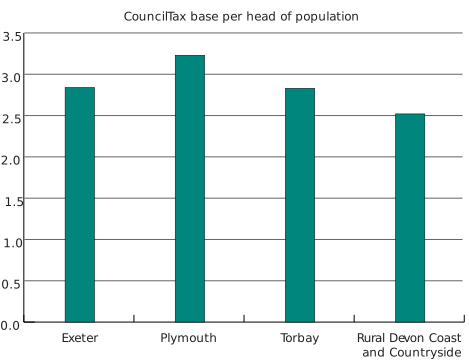
Figure 4. Council tax base per head of population in the four unitary solution.
| Unitary authority | Council tax base per head of population |
|---|---|
| Exeter | 2.84 |
| Plymouth | 3.23 |
| Torbay | 2.83 |
| Rural Devon Coast and Countryside | 2.52 |
Criteria 2: Efficiency, capacity and withstanding financial shocks
Our proposal delivers a robust and sustainable framework for public service delivery across the County. By aligning council structures with coherent economic and geographic areas, the model avoids the pitfalls of over centralisation and fragmentation, instead enabling tailored responses to local needs.
It builds on the proven track record of the two unitary authorities, the growth and ambition of Exeter, and the opportunity to deliver a fit for purpose rural unitary council that drives efficiencies from the outset. It ensures that each new authority is a viable size to deliver services effectively, withstand financial shocks, and operate within a balanced and sustainable tax base.
The model supports transformation through shared services, streamlined leadership, and targeted investment. It demonstrates how the four unitary solution lays the foundations for smarter, more responsive local Government that delivers best value for Devon’s communities.
Our proposal delivers a robust and sustainable framework for public service delivery across the County. By aligning council structures with coherent economic and geographic areas, the model avoids the pitfalls of over centralisation and fragmentation, instead enabling tailored responses to local needs.
It builds on the proven track record of the two unitary authorities, the growth and ambition of Exeter, and the opportunity to deliver a fit for purpose rural unitary council that drives efficiencies from the outset. It ensures that each new authority is a viable size to deliver services effectively, withstand financial shocks, and operate within a balanced and sustainable tax base.
The model supports transformation through shared services, streamlined leadership, and targeted investment. It demonstrates how the four unitary solution lays the foundations for smarter, more responsive local Government that delivers best value for Devon’s communities.
This section addresses the Government’s second criteria for unitary local government – with local authorities being the right size to achieve efficiencies, improve capacity and withstand financial shocks.
Criteria 2a and 2b: The right population size for the area.
Criteria 2c: Improving council finances through efficiencies and providing best possible value for money.
Criteria 2d: Managing transition costs and planning for future service transformation opportunities.
Criteria 2e and 2f are not applicable in Devon as no councils are under Best Value Interventions or receiving Exceptional Financial Support; or have failure linked to capital practices.
The right size for Devon
The four unitary solution is about shaping a brighter future for Devon — one that balances the benefits of working together with the need to stay close and responsive to our communities. While it doesn’t follow the guidance of aiming for councils with populations of 500,000, this approach is designed to make local Government more efficient, flexible and stable. It’s a plan that values local knowledge, builds on what already works well and gives residents a say in how services are delivered — making sure Devon remains both strong and uniquely itself.
With the sizes proposed for each unitary council in Devon, the model delivers:
- Proven financial savings and transformation.
- Sensible geographies and economic cohesion.
- High quality public services tailored to local needs.
- Strong foundations for devolution and strategic collaboration.
The four unitary model takes what already works well in Plymouth, Torbay and Exeter and builds on it, making sure we don’t lose sight of the things that matter most to local people. By learning from their successes, this approach keeps disruption and risk to a minimum and makes sure the needs of urban, rural and coastal communities are properly understood and looked after.
It maintains essential services such as adult social care, children’s services, and SEND, ensuring continuous support for vulnerable populations. Ongoing improvements in Plymouth and Torbay will continue uninterrupted, though LGR will also drive broader positive change. Torbay and Plymouth are not competing hypothetical theories of unproven local government design. The work we have undertaken with PeopleToo shows credible evidence that these smaller unitary authorities deliver for the populations they serve.
The four unitary solution has been designed to balance operational scale with local responsiveness, making sure the new councils are large enough to be efficient whilst sized to be visible and accountable. By designing, rather than inheriting boundaries, councils can deliver services efficiently, withstand financial shocks, and maintain a clear connection to the communities they serve.
Our proposal provides the ideal foundation for meaningful devolution and effective strategic alignment across the region. Each of the four councils is sized to support robust local governance and facilitate engagement with the proposed MSA.
This model directly supports the Government’s ambition to transfer decision making and resources away from Westminster, empowering communities at a local level.
- Viable and Resilient Councils: Each of the proposed unitary councils is financially viable, organisationally resilient, and strategically positioned to meet both current and future challenges.
- Regional Collaboration with Local Distinctiveness: The four unitary solution strikes a balance between regional collaboration and safeguarding the unique characteristics of each locality. It avoids the pitfalls of a one size fits all approach, ensuring that local priorities are not diluted within a larger, less responsive structure. Notably, the rural authority represents circa 56% of the land area, preserving and amplifying the importance of vital agricultural and environmental interests.
- Effective Engagement with National Programmes: This model enables coherent and coordinated engagement with national funding streams, policy initiatives, and programmes. Councils are positioned to bid for national initiatives.
- The right size for success: Our region’s track record is already distinguished by ongoing and successful transformation. The four unitary councils are the right size to deliver efficiencies, improve organisational capacity, and withstand financial shocks. Unlike larger, more remote structures, this model preserves the ability to address unique local needs, particularly in areas like Torbay, where a population of 138,400 would risk being subsumed within a 500,000+ catchment. Torbay alone welcomes over 4.5 million visitors annually, swelling the population and contributing £410 million to the local economy — figures that highlight the necessity for tailored governance.
- Distinct Needs: With projected population growth of 8% by 2030 and a tourism sector that supports 8,000 jobs, Torbay’s requirements differ markedly from sister councils. Its strong balance sheet and history of transformation underscore its ongoing viability and resilience.
- Shared Services and Growth Opportunities: Existing partnerships, such as SWISCo (Torbay Council’s wholly owned company which delivers essential environmental and infrastructure services), are projected to deliver £4.2 million in efficiency savings over the next three years. These platforms enable future growth and innovation across the authorities.
- Forward Plans: Plymouth, Exeter and Torbay each have a clear and compelling vision for continued progress for their communities. Under the springboard of LGR it will open up opportunities for Devon’s urban councils and provide bespoke forward planning for Devon’s rural communities.
The transition to a four unitary solution is one that is built for Devon, by Devon. It offers a sound, compelling, and locally grounded alternative to a remote mega council, and it deserves thoughtful consideration as Devon’s answer to LGR as the region moves forward with reorganisation.
Delivering equitable value beyond scale
The financial case for Devon is robust, with a high level summary as follows:
- £22 million in initial organisational savings.
- £36 million in service savings, achievable by year five.
- £52.5 million of transition costs, carefully managed and lower for Plymouth and Torbay, where there is minimal or no change.
- Payback of transition costs by year three of implementation.
Efficiencies are identified through:
- Optimised leadership structures, reducing duplication.
- Proportionate workforce reductions.
- Rationalisation of service delivery based on benchmarking against council type and Devon-wide averages.
- Leveraging shared services using organisations such as SWISCo (Torbay Council’s wholly owned company which delivers essential environmental and infrastructure services) and existing transformation programmes.
This approach makes sure taxpayers receive the best possible value for money, and councils are placed on a firmer financial footing without relying on central debt relief.
Transformation is not a future aspiration – it is already underway. The four unitary solution accelerates and scales existing plans, with invest to save opportunities supported by flexible use of capital receipts.
Work was commissioned through Pixel Financial Management to provide estimates of funding for 2026/27 across the four councils, with comparisons for business rates income, council tax income and grant income per head of population. Figure 3 shows a summary of this funding per head for each proposed council.
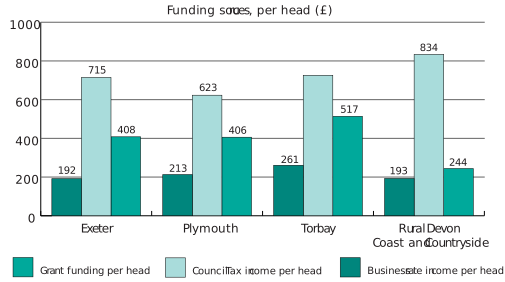
Figure 5. Funding sources per head of population
| Unitary authority | Grant funding per head | Council Tax income per head | Business rate income per head |
|---|---|---|---|
| Exeter | 192 | 715 | 408 |
| Plymouth | 213 | 623 | 406 |
| Torbay | 261 | 726 | 517 |
| Rural Devon Coast and Countryside | 193 | 834 | 244 |
The analysis shows that the four unitary solution improves the balance across all councils and is financially viable when compared with the share of population across the four proposed councils. Tables 3 and 4 summarise the results with the focus on total resources per head. Table 3 shows the figures for the existing councils without any changes (i.e. our Base Proposal) and Table 4 reflects our Modified Proposal.
| Metric | Exeter | Pymouth | Torbay | Devon | Total/average |
|---|---|---|---|---|---|
| Total net resources | £155m | £343m | £209m | £905m | £1,612m |
| Total population | 131,000 | 270,000 | 140,000 | 709,000 | 1,250,000 |
| Population share | 10% | 22% | 11% | 57% | 100% |
| Resources per head of population | £1,130 | £1,276 | £1,501 | £1,299 | £1,298 |
| Resource share | 10% | 21% | 13% | 56% | 100% |
| Metric | Expanded Exeter | Expanded Plymouth | Torbay | Rural Devon Coast and Countryside | Total/average |
|---|---|---|---|---|---|
| Population share | 21% | 22% | 11% | 43% | 100% |
| Total population | 260,000 | 300,000 | 140,000 | 550,000 | 1,250,000 |
| Population share | 21% | 22% | 11% | 43% | 100% |
| Resources per head of population | £1,314 | £1,242 | £1,501 | £1,271 | £1,299 |
| Resources share | 21% | 24% | 13% | 42% | 100% |
In the proposed four unitary solution, resources per head is highest for Torbay and lowest for Plymouth, with Torbay continuing with a share of resources that exceeds its share of population. The other councils all have reasonably close alignment between share of population and share of resources, with the exception of Exeter which has a 1.5% lower share of funding compared with population, suggesting financial challenges without any expansion.
Investing in transformation across Devon
Service and organisational savings
There are initial organisational wide savings and service savings to be made if local government in Devon is reorganised based on this proposal. This would reduce the baseline cost figures of just over £2 billion, as shown in Table 5 and modelled against the four proposed unitary structures
| Service | Expanded Exeter | Expanded Plymouth | Torbay | Rural Devon Coast and Countryside | Baseline total |
|---|---|---|---|---|---|
| Education Services | 158,214 | 150,106 | 79,872 | 328,662 | 716,853 |
| Highways and Transport | 8,366 | 9,217 | 6,700 | 25,660 | 49,943 |
| Children's Social Care | 62,899 | 92,845 | 48,954 | 130,662 | 335,360 |
| Adults Social Care | 124,782 | 138,665 | 67,963 | 259,214 | 590,624 |
| Public Health | 12,405 | 19,642 | 11,439 | 25,769 | 69,255 |
| Housing Services | 6,705 | 9,123 | 6,902 | 9,551 | 32,281 |
| Cultural and Related Services | 12,705 | 12,070 | 3,021 | 14,144 | 41,940 |
| Environmental and Regulatory Services | 31,190 | 23,789 | 15,132 | 65,409 | 135,519 |
| Planning and Development Services | -1,484 | -8,844 | 1,850 | 10,816 | 2,338 |
| Central services | 8,841 | 8,571 | 8,693 | 16,555 | 42,660 |
| Total baseline cost of services | 424,622 | 455,184 | 250,526 | 886,441 | 2,016,773 |
The Chief Financial Officers across Devon have worked to model transformation and invest to save opportunities (see Appendix 2). This work has been supplemented and supported by independent financial consultants.
It is estimated that almost £22 million of organisational savings can be made across the four councils, with a further circa £36 million in service savings that can be made because of the new configuration.
Details of the organisational savings are shown in Table 6.
Table 6. Forecasted organisational savings.
Right sizing the organisation
Description: Determining the right size of the organisation, proportionate to the services that are being delivered, offset by the costs of innovative technology and upskilling individuals. Reducing overall workforce through role consolidation and automation.
Estimated savings: £10m
Optimising Leadership
Description: Reviewing the number of managerial roles to eliminate duplication and enhance operational efficiency and reviewing the costs of democratic services (elections, committee support, etc.) to be proportionate to the new authority.
Estimated savings: £6m
Consolidating Corporate Services
Description: Consolidating back office functions, such as Human Resources, Finance, and Information Technology to streamline operations, enhance efficiencies and unlock savings.
Estimated savings: £2m
Improved Digital and IT Systems
Description: Implementing unified digital platforms, automating repetitive tasks, streamlining workflows, and eliminating manual processes can lead to considerable time and cost savings. Unified platforms and systems rationalisation reduce licensing, support, and admin overheads.
Estimated savings: £3m
Asset and Property Optimisation
Description: Reviewing the property portfolio to ensure alignment with the council’s overall objectives and community needs.
Savings category: £1m
It is estimated that significant baseline costs can be reduced through delivering services differently across a four unitary model. These service savings have been estimated using information from Revenue Outcome and Revenue Account forms and applying various methodologies to inform the estimates.
Service savings methodologies include:
- Service area costs analysed into employee costs, running costs, fees and charges and other incomes to inform the potential level of savings across headings based on local knowledge.
- Potential savings calculated if all Devon councils with higher costs were to reduce those costs to council type average.
- Potential savings calculated if all Devon councils with higher costs were to reduce those costs to Devon average.
- Proxies used for each type of costs.
Table 7 shows how the baseline figures are estimated to change under the new configuration and provides a summary of estimated savings against each service area.
| Service | Baseline total | Revised Total (after savings) | Estimated notional savings | Percentage of total service savings |
|---|---|---|---|---|
| Education Services | 716,853 | 716,853 | 0 | 0% |
| Highways and Transport | 49,943 | 47,189 | -2,754 | 8% |
| Children's Social Care | 335,360 | 325,299 | -10,061 | 28% |
| Adults Social Care | 590,624 | 578,812 | -11,812 | 33% |
| Public Health | 69,255 | 68,562 | -693 | 2% |
| Housing Services | 32,281 | 31,322 | -959 | 3% |
| Cultural and Related Services | 41,940 | 40,147 | -1,793 | 5% |
| Environmental and Regulatory Services | 135,519 | 132,134 | -3,385 | 9% |
| Planning and Development Services | 2,338 | 1,559 | -779 | 2% |
| Central services | 42,660 | 39,190 | -3,470 | 10% |
| Total baseline cost of services | 2,016,773 | 1,981,068 | -35,705 | 100% |
These are felt to be prudent estimates and in general represent between 0.5-2% of operating costs and/or income levels where appropriate. Total estimated savings are less than 2% of the total baseline service spend across the region.
Reasonable checks have been undertaken, particularly where significant savings are estimated such as the £18 million of savings across children’s and adult social care services.
Current benchmarking data shows Devon County Council with a high unit cost for adult social care services at £606 per head. Figure 4 shows how councils compare when you correlate adult social care spend per head with the Fair Funding relative needs formula for adult social care spend estimated for 2026/2027. The table shows Devon spend exceeding the expected spend/need level with Plymouth and Torbay being below the line of best fit.
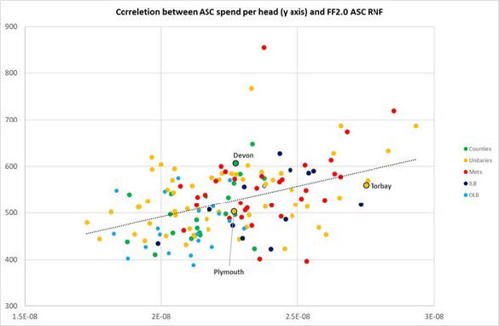
Figure 6. Correlation between adult social care spend and Fair Funding relative needs formula
Reducing the unit cost across Devon to the same level as Torbay Council, at £560 produces an estimated saving of circa £30 million, based on current service demand. This would be challenging but shows there is significant potential, particularly as Torbay has commenced a programme of transformation within its adult social care services to manage demand and costs further. This therefore supports the estimate of £12 million for adult social care savings used in this model.
Using a similar approach, Figure 5 shows the correlation between children’s social care spend per head and the Fair Funding relative needs formula proposed for 2026/2027. It shows that service costs for all three of the current upper tier councils are above the assessed relative needs level and therefore suggests significant savings are possible through efficiencies and further focus on prevention.
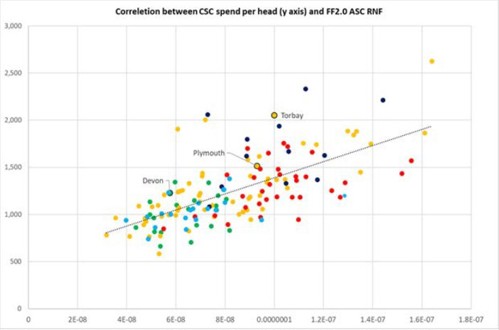
Figure 7. Correlation between children’s social care spend and Fair Funding relative needs formula
The transition to a new four unitary council model represents a bold investment in Devon’s future, with each cost category supporting a strategic step towards a more efficient, resilient, and responsive local government.
Transition costs
The associated costs are necessary to facilitate the longer term benefits and enact local government transformation in Devon. Minimal costs have been estimated relating to the expansion of Plymouth and no costs relating to Torbay Council, which would remain unchanged.
Total transition costs are estimated to be £52.5 million with approximately half of the overall transition costs associated with workforce exit and one off redundancy and termination costs.
Costs incurred by a shadow authority prior to Year one of a new authority will form part of the existing cost envelope and be brought forward. Funding would need to be identified and agreed collectively by the existing authorities working in their shadow authority roles. This is likely to include the use of reserves and flexible use of capital receipts.
The estimates for the transition costs are set out in Table 8 together with the rationale for those costs.
The estimated transition costs outlined are not just expenditures — they are targeted investments in Devon’s future. Each category supports a critical aspect of organisational transformation, from renewing the workforce and building new capabilities, to modernising infrastructure and engaging and empowering communities – all of which the public deserves.
With careful management and a clear strategic vision, these investments will enable all the unitary councils to deliver high quality, efficient, and sustainable services for years to come. We believe this is the fundamental shift that Government and the public have been asking for.
Table 8. Transition costs breakdown and rationale.
Enabling organisational renewal
Amounts: £25.2m
Summary: Compensation paid to employees as a result of restructuring to enable the transition to leaner, more agile structures, unlocking long term efficiencies.
Rationale: A decisive move to reshape organisations, making sure that the new authorities are staffed with the right skills and capacity for modern service delivery. This investment enables the transition to leaner, more agile structures, unlocking long term efficiencies and creating opportunities for new talent and innovation.
Service change initiatives
Amounts: £6.0m
Summary: Invest to save costs to deliver future savings (less than 20% of estimated service savings).
Rationale: Initial investment designed to facilitate and accelerate the realisation of savings, delivering benefits to residents as soon as possible.
Ensuring a smooth transition
Amounts: £5.4m
Summary: Transition programme team including legal services, human resources, project and programme management, and specialist support.
Rationale: Investing in a transition team reflects a commitment to professional programme management. By engaging legal, contractual, and project management specialists, the reorganisation is de-risked and guided by best practice, ensuring that the change is well coordinated and delivers on its objectives.
Modernising infrastructure
Amounts: £3.1m
Summary: Alignment of systems and digital infrastructure, including data migration, commonality of cyber security, and training for new systems.
Amounts: £2.5m
Summary: Reconfiguration of buildings, costs of disposal, and termination fees on leases.
Rationale: Investments in digital systems and estates and facilities will be required to modernise the councils’ infrastructure, enabling more efficient service delivery and better use of resources. These upgrades lay the foundation for future innovation and improved public services.
Processes and procedures
Amounts: £2.4m
Summary: Harmonisation of processes to facilitate effective service transition.
Rationale: Consolidating services within the new authorities – both back office and frontline – will making sure that efficiencies are realised and our communities can benefit from streamlined, easy to access services.
Building capability for the future
Amounts: £1.7m
Summary: Upskilling and reskilling employees to adapt to new roles and responsibilities.
Rationale: This proactive approach to workforce development supports career progression, fosters adaptability, and strengthens the overall capability of the organisation. It making sure that employees are fully equipped to thrive in new roles and responsibilities.
Engaging communities and the workforce
Amounts: £3.1m
Summary: Development of communications, branding, training, and public information in relation to new authorities.
Rationale: By prioritising clear communication, branding, and training, the transition will be understood and supported by both staff and the public, fostering a sense of shared purpose and positive momentum.
Sub-total: £47.6m
Contingency
Amounts: £4.8m
Summary: Prudent addition of 10% contingency on estimated costs above
Rationale: Maintaining a contingency demonstrates prudent financial planning, making sure that the transition is robust against unforeseen challenges.
Total: £52.4m
Financial sustainability
The savings and costs estimated and highlighted in this section have been profiled across future years to provide a ten year outlook and assess the financial feasibility of the proposal and the longer term benefits.
The analysis set out in Table 9 shows the estimated transition costs and notional savings projecting a payback period of between two to three years. From this point in time onwards the cumulative net savings exceed the transition costs.
| Consolidated costs and savings | Transition costs | Organisational savings | Service savings | Annual net impact | Cumulative net impact |
|---|---|---|---|---|---|
| Year 1 | 26,332 | -10,219 | -1,890 | 14,223 | 14,223 |
| Year 2 | 18,067 | -14,464 | -5,669 | -2,066 | 12,157 |
| Year 3 | 8,128 | -17,294 | -13,228 | -22,394 | -10,237 |
| Year 4 | 0 | -20,124 | -24,565 | -44,689 | -54,926 |
| Year 5 | 0 | -20,124 | -37,793 | -57,917 | -112,843 |
| Year 6 | 0 | -9,974 | -37,793 | -47,767 | -160,610 |
| Year 7 | 0 | -9,974 | -37,793 | -47,767 | -208,378 |
| Year 8 | 0 | -9,974 | -37,793 | -47,767 | -256,145 |
| Year 9 | 0 | -9,974 | -37,793 | -47,767 | -303,912 |
| Year 10 | 0 | -9,974 | -37,793 | -47,767 | -351,679 |
The introduction of a four unitary council model is underpinned by a clear commitment to financial sustainability. By focusing on the effective delivery of savings, the new structure aims to reduce the overall cost base while maintaining high quality public services. This approach makes sure that resources are used efficiently, enabling the authorities to operate within their means and provide long term value to residents. Through a combination of targeted investments and prudent financial planning, all of the unitary councils are positioned to achieve lasting stability and resilience in their financial operations.
Case study: Torbay Council redesign programme
We launched our council redesign programme in 2019. This is the biggest programme of change we have seen in a decade. It set out our aspirations to modernise, simplify, and standardise how we work to better serve our communities. The programme is building a resilient council by shifting our focus from internal processes to putting the customer at the centre of everything we do, every decision and every action.
The programme is working towards delivering a new Target Operating Model and has delivered new Public Affairs and Community Empowerment strategies, making sure we listen and act on what our residents tell us. We have created new flexible working spaces that reduce our office footprint and make our spaces more efficient and a nicer place to work.
We are now focussing on two major projects: Our Organisation and Our People. Our Organisation is working on reducing manual processes, increasing automation and realising efficiencies. It is delivering a new Customer Relationship Management (CRM) system, a Business Portal and Power BI dashboards. We are undertaking service reviews across the organisation which are delivering improvements. From this work, significant benefits have emerged, including our CRM system realising £1.7 million in savings over eight years. We have streamlined several of our services – resulting in our workforce being more agile, completing reports onsite, reducing duplications and improving service delivery. Just one example of the impact is the reduction of processing times on housing disrepair cases by 16 weeks. Power BI is transforming our data management. Its interactive dashboards have removed the need for manual reporting, eliminating room for data error but most importantly revolutionising the way we use our information. This project has supported our Planning, Housing & Climate Emergency team to digitise paper applications which has improved public access and simplified conveyancing. It has meant our managers have access to real time data and are able to know exactly what the case loads are, if we are delivering and most importantly keeping on track for our customers.
The Our People project is delivering against a comprehensive People Strategy and is improving our engagement and recruitment. Workforce planning is focussing on future needs and targeting inefficiencies. Through delivering our Organisational Development Strategy we are promoting continuous learning, diversity, and inclusion. We have completely redesigned how we recruit. Our new applicant tracking system has done away with paper applications and manual sifting to a unified approach from application all the way through to induction. This has reduced our costs, freed up time for recruiting managers and improved the candidates’ experience.
And our Relational Council initiative is fostering belonging, which has reduced HR involvement and improved staff wellbeing. Our Redesign Programme is increasing employee satisfaction, organisational agility and innovation. It’s aligning our workforce with our strategic goals, which enhances service delivery as we continue our journey of transformation.
Criteria 3: High quality and sustainable public services
Our proposal supports high quality locality based services by implementing structures which best reflect the distinct profiles of our areas. It avoids unnecessary fragmentation by building on the existing capacity of the current unitary councils serving Plymouth and Torbay, while making sure that the new unitary councils are operationally viable.
Central to our proposal is maintaining and improving services for the most vulnerable in our communities. Crucial services such as adult social care, children’s services, SEND and homelessness are vital to making sure that all our residents have the best outcomes in life. The transformation and improvement journeys which are underway across Devon will continue, with the opportunities for further integration and transformation maximised.
There is a long history of shared and joined up services across Devon – at every current tier of local government, with statutory partners and with the community, voluntary and social enterprise sector. We will build on our existing strengths and explore further collaborative working and joint commissioning. This model balances local responsiveness with the opportunity of longer term service budget savings through working together at the right level.
This section addresses the Government’s third criteria for LGR. New unitary structures must prioritise the delivery of high quality and sustainable public services.
Criteria 3a: Improving local service delivery and avoiding unnecessary fragmentation of services.
Criteria 3b: Delivering value for money through public service reform.
Criteria 3c: Protecting crucial services
Distinct local needs
The four unitary solution reflects the needs of people across all of Devon. It is built around the principle that local government should be designed around real places, communities and economies. This enables decisions to be made closer to the communities that our councils serve, resulting in services which are responsive to the different needs of different places.
It reflects the distinct profiles of the four areas in relation to high cost services, enabling local support dependant on need. It supports a more tailored service model which is responsive to the urban contexts of Exeter, Plymouth and Torbay and the rural context of Devon.
While Devon is associated with natural beauty and assumed prosperity, the reality for many residents is more complex. Deprivation in coastal and rural areas is frequently less visible than in urban settings, but it is no less significant. Issues such as limited access to essential services, poor transport links, and digital exclusion can have a profound impact on quality of life, particularly for older people and those on low incomes.
Within the wider area, Plymouth and Torbay face the highest levels of deprivation. Both have significant concentrations of Lower Super Output Areas in the most deprived national deciles. This is coupled with higher levels of child poverty, higher levels of Free School Meal eligibility and lower life expectancy. Within the area to be served by the new Rural Devon Coast and Countryside Council there is much lower deprivation overall, although rural poverty, low wages, and affordability pressures in housing, transport and connectivity remain significant.
There is higher household deprivation across multiple dimensions within Torbay (22%) and Plymouth (20.6%) compared with the existing Devon districts, though East Devon and Exeter also show significant challenges. 24.2% and 23.5% of families have relatively low incomes in Torbay and Plymouth respectively, showing that child poverty is more acute in these areas compared to the current Devon County Council area (18.6%). For both Torbay and Plymouth, these are above the South West and national averages.5
Many villages and hamlets across Devon face persistent barriers to accessing healthcare, education, and employment opportunities. Public transport is often infrequent or unavailable, making it difficult for residents without private vehicles to reach jobs, training or even basic amenities. Digital connectivity, while improving, still lags behind in some of the most remote areas, further isolating individuals and restricting access to online services and information.
Nationally, the Index of Multiple Deprivation shows that rural deprivation is often masked by averages, but pockets of significant need exist even in otherwise affluent counties. In rural Devon, the combination of low salaries, high housing and living costs, and additional fuel costs for both heating and transportation contribute to poverty, particularly in working households.
The Office for National Statistics also highlights that economic inequalities are not just regional but can occur between neighbourhoods, with some rural and coastal towns among the most income-deprived areas in England6. Life expectancy and healthy life expectancy gaps are largest in Plymouth, with up to 27 years difference for females between life expectancy and healthy life expectancy.
Economic inactivity among young people remains stubbornly high. In Torbay, only 55 per cent of care experienced young adults are in education, employment or training after school. Compounding this, many of those achieving strong GCSE results at Key Stage 4 relocate for work or study. This outward migration reduces local talent and weakens community resilience.
Education systems are under strain from widening gaps in exclusions and suspensions and the SEND agenda casts a long shadow over mainstream provision. Devon and Torbay both have higher proportions of children requiring special educational needs support than the national average. The result is a continued challenge on the Dedicated Schools Grant High Needs Block. Torbay is part of the Safety Valve programme and, although continues to make progress, this is within the context of a difficult national and local picture with increased complexity of need and a more fragmented school landscape.
Whilst Plymouth and Torbay’s challenges around urban poverty, housing homelessness and multiple, complex health needs are fundamentally different to the issues facing rural Devon of low wages, connectivity and housing affordability, hidden poverty is a recurring theme in Devon’s communities – and local Government reorganisation gives us the opportunity to tackle it.
The proposed reorganisation of local Government in Devon presents an opportunity to combat deprivation more effectively. By bringing decision making closer to communities and embedding mechanisms for local engagement, the new model aims to make sure that all communities are heard and that resources are targeted where they can have the greatest impact.
Strengthening collaboration between councils, health services, and the voluntary sector will be essential in bridging gaps in provision and supporting those who are at risk of being left behind. Ultimately, reducing deprivation in Devon is not just about addressing immediate needs, but about creating the conditions for long term resilience and opportunity.
This means investing in transport and digital infrastructure, supporting affordable and energy efficient housing, and empowering communities to shape the services that matter most to them. By recognising and responding to the specific challenges within communities, Devon can build a fairer, more inclusive future for all its residents.
Promoting a unified approach
Building on the existing, well performing unitary councils of Plymouth and Torbay, the four unitary solution minimises disruptive change whilst bringing the right focus to urban, rural and coastal needs. It preserves continuity in the delivery of crucial services like adult social care, children’s services, and SEND, making sure uninterrupted support for the most vulnerable in these areas.
Significant improvement journeys are underway in both Plymouth and Torbay – our communities and our partners do not want these journeys interrupted. However, LGR is a catalyst for change and improvement across the wider area.
The creation of a new urban unitary council for the Exeter area concentrates improvement capacity where growth pressures and service demand are rising fastest. A single leadership spine for early help, SEND inclusion partnerships, and school based safeguarding will accelerate a shift to prevention; while a unified transport and planning function unlocks growth sites that relieve viability constraints and support balanced communities.
Instead of residents navigating two tiers of Government, they will have one clear point of contact – a single website, one phone number, and local hubs where they can access housing, social care, and public health support in one place. This change isn’t just about convenience; it’s about removing duplication and freeing up resources to invest in frontline services. By sharing IT systems and procurement, and by managing waste and recycling at scale, the council can deliver better value for money while protecting crucial services like adult social care and children’s safeguarding.
At the same time, Exeter’s identity will be safeguarded through Charter Trustees, and neighbourhood partnerships will give communities a real voice in shaping local priorities. In short, this transformation is about creating a council that is financially resilient, digitally modern, and keenly focused on the places it serves.
Addressing rural deprivation requires a tailored approach that recognises the unique challenges faced by these communities. Solutions must go beyond simply replicating urban models of service delivery. Instead, there is a need for flexible, locally driven interventions that harness the strengths of voluntary groups, parish councils, and community organisations. Initiatives such as place based pilots and community led partnerships have already demonstrated the value of listening to residents and co-designing support that reflects local realities.
The new Rural Devon Coast and Countryside Council will be able to focus on solutions in a rural context, utilising the local knowledge of the existing district councils. Based around existing service delivery within community offices, a renewed focus on locality will be a driver for prevention, early intervention and support.
Maintaining and improving crucial services
Central to this proposal is Torbay Council’s pioneering approach to integrated health and social care which has a well established track record of speeding up hospital discharges and reducing staff shortages in the care sector. For almost twenty years, the model has proved itself despite our ageing demographic and socioeconomic challenges. Torbay’s Integrated Care Organisation (ICO) has been described as “…a pathfinder and national leader, and there is much learning that can and should be shared from this experience.”7 Torbay’s close relationship with the community and voluntary sector, not least through the Community Helpline, is successfully diverting residents away from statutory services, with support, advice and guidance being provided within and across the community itself.
There is a very significant risk that changes to Torbay Council’s boundaries would lead to the end of the ICO and that services that have been provided by the NHS for almost 20 years will need to be disaggregated from the NHS Trust and staff transferred to the council. This would have a hugely detrimental impact on the vulnerable adults who are supported through this keystone partnership.
Case study: Improving Restorative Practice in Torbay
Our Children’s Services has successfully embedded a restorative and relational practice model that has led to significant improvements in the outcomes for our children and families. This approach prioritises working with families rather than doing to them which results in fostering trust, accountability and stronger relationships throughout the system. Restorative principles are now evident in multiple areas of our practice. This includes direct work with children, complaint resolution, safeguarding and workforce development. In child protection conferences and assessments, professionals use restorative approaches to engage families respectfully. Ofsted’s 2022 inspection highlighted this as a strength, noting that “respectful work by social workers using restorative approaches supports parents to be engaged well in the process.”
Co-production is central to our model. By including children and young people from the start, initiatives such as the “Point of You” feedback service and the “Our Ways of Working” framework makes sure their lived experiences inform the design of the service which is for them. These tools have improved how professionals listen to and act on children’s voices, influencing both safeguarding materials and strategic planning.
The “Language That Cares” campaign has supported a cultural shift across Torbay, encouraging professionals to use language that is respectful, inclusive, and trauma informed. This has helped reduce barriers to engagement and strengthen relationships between services and families.
Our Learning Academy plays a key role in sustaining this change. It provides restorative, relational and trauma-informed training to staff, helping embed these principles into everyday practice. This has contributed to a stable, skilled and reflective workforce who can deliver consistent and effective support.
We are proud to be the first children’s services in the UK to receive Registered Organisation status from the Restorative Justice Council, recognising its commitment to restorative values and practice.
Building on this success, we are now expanding restorative and relational training across our wider services. The ambition is to become a fully relational council, embedding these principles into all areas of our service delivery.
We believe that a four unitary solution offers the strongest foundation for optimising and strengthening children’s services across Devon. Our preferred option will preserve the accountability for the variation in local performance for children’s services with each existing upper tier authority being rated differently by Ofsted (Torbay Council is “Good”, Plymouth City Council “Requires Improvement” and Devon County Council is “Inadequate”).
By disaggregating children’s services into four balanced, locality focused authorities, we can deliver more tailored and agile responses to the distinct needs of urban, rural, and coastal communities. This approach mitigates the risks associated with over centralisation, making sure that each council remains closely connected to its communities and is able to innovate in response to local challenges.
Under the current system, fragmentation has resulted in inconsistent outcomes, duplicated effort, and missed opportunities for early intervention. Transitioning to four unitaries would enable Devon to embed the new Government locality framework at the heart of its children’s services - establishing clear lines of accountability and empowering each authority to co-design services with families, schools, and health partners. This structure is well placed to support the implementation of the latest children’s services reforms, which prioritise integrated, place based support, data driven commissioning, and strong local leadership.
Torbay’s improvement journey provides a compelling blueprint.
The council’s rapid progress — from “Inadequate” to “Good” — was achieved through a sustained focus on relational practice, early help, and partnership with the community. By focussing on engaging its workforce and agreeing with them to adopt restorative practice, a recruitment and retention strategy has been developed, including a commitment to “grow our own” through the creation of the Learning Academy. Success in recruiting newly qualified social workers as well as training and developing existing staff has achieved outstanding results with a current vacancy rate of only 13%. An engaged, trained and focussed workforce has enabled real traction on improvement, culminating in improved outcomes for children and young people.
Having been rated as “Good” for Children’s Services, the focus in now on becoming outstanding and in February 2023 the Council were awarded Registered Restorative Organisation status by the Restorative Justice Council, the first local authority in the UK to receive this award.
If Torbay Council is subsumed within a larger unitary authority combining with a part of a less highly performing neighbouring council area, whatever the boundaries, there is a real risk the performance of children’s services in Torbay will be pulled backwards with devastating consequences for children and young people.
Plymouth City Council is demonstrating significant improvement in children’s social care services, with Ofsted confirming in January 2024 that services “require improvement to be good”. The improvement journey includes strengthened practice in case summaries, supervision, visits, and plans. The council has a clear transformation plan in place to develop, sustain and embed good practice. By extending Plymouth’s boundary, greater consistency in children’s services will be created across what is functionally a single community. The expanded boundary will support better early help provision by enabling a more unified approach to family hubs and preventative services, addressing one of the key improvement areas identified by Ofsted.
A four unitary model would allow best practice to be scaled and adapted across Devon, with each authority empowered to develop its own culture of excellence, invest in workforce development, and respond swiftly to emerging needs. By aligning governance with the new locality framework, Devon can make sure that every child, regardless of where they live, benefits from high quality, joined up support delivered by councils that are both resilient and responsive.
This is not simply a structural change; it is a catalyst for transformation. The four unitary solution provides the optimal platform for embedding Government reforms, driving service improvement and delivering the outcomes that Devon’s children and families deserve.
All three upper tier councils in Devon are currently judged Inadequate in SEND provision, but each presents a different context.
Torbay Council has most recently received its evaluation, with inspectors highlighting entrenched problems, long delays, unmet needs, poor oversight and unresolved issues from earlier inspections. Over recent years Torbay Council has been working with the Schools’ Forum to address the pressures on the High Needs Block of the Dedicated Schools Grant. In February 2022, the Council was invited to take part in the Safety Valve intervention programme with the Department for Education (DfE). As part of the programme, we and our partners have produced, and achieved thus far, a deficit recovery plan that leads to a balanced High Needs Block by 2026/2027. The DfE have agreed to fund the cumulative deficit of up to £12.91 million as long as milestones are met during the process. To date we have received £9.3 million from the DfE towards the deficit.
Devon County Council has been under formal intervention since 2018, was re-inspected in 2022 and despite improvement plans and DfE support, implementation of improvement for SEND support remain weak and outcomes for families are still poor. Like Torbay Council, Devon County Council has a Safety Valve deal in place, but unlike Torbay Council it has repeatedly exceeded the spending targets set by the agreement. Further, no new councils are permitted to join the Safety Valve programme and therefore national consideration will need to be given to how Devon County Council’s (and other upper tier authorities’) SEND deficit is managed.
Plymouth City Council had its SEND inspection in mid 2023 and is under an improvement notice, with urgent priorities around early identification, transitions, and exclusions. While collaborative planning began quickly, full impact was yet to be demonstrated.
Torbay Council’s approach to reducing homelessness and improving outcomes for households demonstrates how local innovation should be at the heart of improving crucial services. Through identifying alternative, cost effective accommodation models and the provision of specialist accommodation when the market does not meet the needs of our community, we are successfully preventing the reoccurrence of homelessness. Supporting individuals and families to remain in stable, sustainable housing provision is a knock on positive economic impact.
Case study: Torbay Council - Homelessness Prevention
In our Housing Strategy 2023 –2030 we say that ‘A home is special to everyone and directly contributes to good health, wellbeing, and life achievement. Having a place to call home is one of life’s main goals. It offers warmth and shelter; and is the place where we feel safe and secure; a place to shape family.’
This was our aspiration when supporting a family who had faced repeat homelessness by regularly being in rent arrears and facing the ongoing risk of eviction. By working with the family and using a multi agency approach, together stabilised their housing situation.
This showcases the power of early intervention and collaborative working, particularly through a partnership between Housing Options and Children’s Services.
The family had approached the housing service three times in 18 months due to cyclical arrears. Although previous interventions temporarily resolved the issue, the underlying causes remained unaddressed. This lead to recurring debt and a perception that we would always step in without requiring accountability.
To break this cycle, a comprehensive prevention plan was developed. The aim was to uncover the root causes of the arrears, resolve tenancy-related issues and support the family in taking ownership of their situation. Discussions with the landlord revealed further concerns, including poor property condition, missing fixtures and noise complaints from neighbours.
An application for Discretionary Housing Payment was submitted, but approval hinged on the landlord withdrawing the eviction notice - conditional on resolving all tenancy issues. Housing worked closely with Children’s Services, education, and youth services to shift the focus of multi agency planning towards homelessness prevention.
Neighbour mediation was facilitated, and the teenage son, whose loud music had caused complaints, was supported with headphones to reduce disturbances. The social worker helped the family clear rubbish and carry out minor repairs, including fitting door handles and fixing worktops. Communication protocols were established between the family and landlord and rent payments were safeguarded through direct benefit payments. The family also received support with benefit entitlements and affordability assessments.
The landlord was satisfied with the improvements and the family’s proactive engagement. He felt reassured by our involvement and agreed to withdraw the eviction notice. A new tenancy was issued, and the family has not returned to housing services since.
The intervention led to improved living conditions, greater tenancy sustainability and more effective support from Children’s Services. It also strengthened relationships between departments, particularly with education professionals who often identify early signs of family distress. Housing gained valuable insight into the complex challenges families face and how tailored, preventative support can lead to lasting change.
Transformation and integration
Torbay is reimagining adult social care with a simple but powerful goal: to help people feel truly at home, connected to their community, and supported to live the life that matters most to them. We want every resident to feel empowered — able to make informed choices about their care, and confident that the support they receive is not only high quality but also tailored to their needs.
By working closely with our local community, we enable people to find and use the resources around them — helping them navigate their community and the health and social care system — so they can stay independent and in control. And just as importantly, we support those who provide care to feel valued and equipped to enable people to take charge of their own decisions. Our transformative approach is about building a culture of mutual support — where wellbeing is something we create together. It is grounded in key principles: being agile and open to new ideas, embedding strengths based practices that focus on people’s abilities and assets, delivering person centred, flexible long term care, and focusing on recovery and reablement. With joined up commissioning and integrated delivery, we’re giving our practitioners the freedom to work creatively with residents, drawing on a rich mix of health, care and voluntary services across Torbay.
Torbay Council aims to enhance its status as a Restorative Council by developing and delivering a Families First Partnership Programme, which places children and their families at the centre of decision making.
Torbay has developed a well-established multidisciplinary team, bringing together professionals from statutory agencies and education to work collaboratively. Early Help works closely with the Multi-Agency Safeguarding Hub (MASH) to make sure referrals are handled proportionally. Over the past 18 months, service accessibility has increased through the introduction of an electronic referral portal linked to the Case Management System.
Early Help was transformed in 2020/21 into a multidisciplinary service that now includes Family Intervention, Reducing Parental Conflict, Housing Support, Benefits and Work Coaching, and Youth Homelessness Prevention. This collaborative approach extends to partnerships with all partner agencies and the Voluntary and Community Sector, ensuring a comprehensive team-around-the-family model.
A recent redesign of Children’s Services, aligned with the Families First Reforms, has merged Family Intervention, Youth Services, and Child in Need under a unified Family Help service using a locality-based model. This change, launched on 1 September 2025, aims to address local community needs more effectively. The next phase will focus on expanding agency involvement within MASH, enabling professionals and families to connect with the right expert at the right time for earlier support. Additionally, it will further develop Multi Agency Child Protection Teams and will align our Multi-Disciplinary Locality Hubs with our SEND Locality Model and the Health Neighbourhood Model to make sure full integration of services to children going forward delivered at point of need.
In terms of SEND provision, the Torbay local area partnership’s Priority Impact Plan focuses on five areas of improvement. Central to the local area’s approach is local decisions being made by local stakeholders about how children and young people’s needs can be best met, in a more financially sustainable, needs led, inclusive school system. The pilot currently underway aims to pool expertise and resources and to use the economies of scale (at a local level) to enable SEND support and services to be accessed more easily.
Existing shared services
Whilst Torbay Council’s groundbreaking partnership with the NHS speaks for itself, there is a long history of shared and joined up services across Devon. This is at every current tier of local government, with statutory partners and with the community, voluntary and social enterprise sector.
A range of upper tier functions are already shared or joined up across Devon - trading standards for Devon, Plymouth and Torbay is delivered by the Heart of the South West Trading Standards Service; library services are delivered by Libraries Unlimited (a Community Interest Company) on behalf of Devon County Council and Torbay Council; and across Devon, the majority of waste that isn’t reduced, reused, recycled or composted is sent to one of two energy recovery facilities either in Exeter or Plymouth.
With Devon County Council and Torbay Council having developed a Joint Local Transport Plan in the past, the Devon and Torbay Combined County Authority (DTCCA) is now the Local Transport Authority. The Plymouth and South West Devon Joint Local Plan was adopted by Plymouth City Council, South Hams District Council and West Devon Borough Council in March 2019.
Devon Building Control Partnership provides Building Control Services across three existing district councils covering over 1,000 square miles. South Hams District Council and West Devon Borough Council has a shared management team and workforce. A stand alone company owned and controlled by the three councils, Strata is a partnership which shares IT services between East Devon, Exeter and Teignbridge Councils.
Further collaboration and joint commissioning
Using the learning from each of these examples, we are committed to making sure that all options for further collaboration and joint commissioning are fully exploited.
The removal of duplication and fragmentation within the existing two tier areas of Devon is vital for improving services for all of our residents. With shared service design principles of co-production, accessibility, and integration, the four unitary solution will improve public services by making them more user focused, efficient and responsive to community needs.
Delivering LGR in Devon is a rare and transformative opportunity — one that allows us to build a modern, resilient, and truly community driven system of local government. And one that collaborates as standard.
Our plan for the next steps of our County is shaped by Devon’s distinctive character: its vast geography, diverse communities, and deep seated sense of place. We’re also drawing on the practical lessons learned from other regions that have successfully navigated similar changes.
At the heart of our approach is a simple promise: to improve the lives of Devon’s residents. We want every service we provide to be responsive to local needs, ambitions, and identities. The move to four unitary councils is designed to make local government more accessible, more accountable, and better equipped to deliver what matters most to our communities.
We know that Devon’s challenges don’t respect council boundaries. Whether it’s tackling health inequalities, driving economic growth, or protecting our environment, the issues we face are shared across cities, towns, villages and rural areas alike. That’s why our vision for LGR is built on collaboration. We’re committed to working together with neighbouring councils, the NHS, voluntary groups, businesses and other partners — because the best solutions are those we design and deliver together. Devon’s reorganisation should be a springboard for change and a new way of collaborative working.
So, looking ahead we’ll continue to seek out opportunities for joint working and shared innovation across the whole County. By pooling our strengths and expertise, we can address complex challenges in ways that no single authority could achieve alone. Our four unitary solution is not just about redrawing lines on a map; it’s about creating a flexible, future ready system that can adapt to new demands and seize new opportunities as they arise.
We want to break down the barriers to our communities accessing high quality public services, homes, efficiencies, sustainability and value for money.
Above all, our commitment is to build local government that is sustainable, resilient, and fit for the future – a system that puts people and places first, and that stands the test of time for generations to come.
Case study: Torbay Council - Safeguarding the future of local libraries
In 2017, we launched a tender process to secure a new provider for Torbay’s library services. Its aim was to protect the quality of provision for local residents while reducing operational costs. With a strong commitment to keeping Torbay’s libraries open, vibrant, and accessible, we appointed Libraries Unlimited a local charity with a passion for community learning.
Originally part of Devon County Council, Libraries Unlimited was formed in 2016 with a mission to deliver innovative, inclusive library services. By partnering with Libraries Unlimited, we achieved significant financial savings while safeguarding the future of our four libraries in Brixham, Churston, Paignton, and Torquay.
Library staff were retained ensuring continuity of service and local expertise. Libraries Unlimited took on responsibility for IT infrastructure and streamlined operations by integrating back-office systems, websites, and library management platforms. All four libraries remain open and annual customer feedback tells us residents value their professional, high quality services.
Partnering with Libraries Unlimited has boosted efficiency and improved user experience for Torbay residents. The service has continued to grow introducing eBooks, audiobooks, digital magazines, newspapers and making it easier for people across Torbay to access resources from home or on the go.
One of the standout benefits of our partnership with Libraries Unlimited is access to Devon’s wider library stock. This gives our residents a richer and more diverse catalogue of books and materials. Libraries Unlimited has also brought cultural vibrancy to the libraries through external funding, including support from Arts Council England. Theatre performances, film screenings, and creative workshops have transformed library spaces into hubs of community engagement, attracting new audiences and fostering local pride.
As a charity, Libraries Unlimited can use funding streams not available to us, regularly securing grants that enhance local services. This flexibility has made Torbay’s library provision more resilient and responsive to the evolving needs of our community, whether digital, economic or cultural.
The commissioning of Libraries Unlimited has delivered more than just cost savings. It has strengthened Torbay’s library network, expanded services and deepened community connections. We have ensured our libraries remain places of learning, creativity and wellbeing across the Bay.
Criteria 4: Working together to understand and meet local needs
From the outset, Torbay Council has been a collaborative, willing partner seeking to bring together councils across the area to work in the best interests of all of Devon’s communities.
With the voice of residents at the heart of developing this proposal, we have tested our emerging thoughts, our interim plan and our final proposal with our residents, our businesses and our stakeholders. A joined up approach to engagement means that our proposal is anchored in its place – designed around real places and real communities – so that all four unitary councils can deliver with purpose.
We know that Devon is beautiful, but we also know that it is not the full story. The challenges facing our residents are complex. They have told us what they value. They have also told us that they expect us to deliver. This proposal meets their needs – in their localities.
This section addresses the Government’s fourth criteria for LGR, in that we need to show how we have worked together to form a proposal which meets local needs and is informed by local views.
Criteria 4a: Meaningful and constructive local engagement.
Criteria 4b: Considering issues of local identity and cultural and historic importance.
Criteria 4c: Addressing local concerns.
Working together
Since the initial publication of the English Devolution White Paper in December 2024, through to the preparation of our interim plan and continuing until the submission of our final proposal for LGR in Devon, the Leader of Torbay Council has been working with the Leaders of all the other councils in Devon to understand their positions.
The sheer geographical size of Devon and the diverse needs of its population have meant that an “obvious” solution has not been forthcoming. The existence of two long standing unitary authorities (serving one of the County’s cities and a separate large urban conurbation), a second city, no fewer than 26 market and coastal towns and the dispersal of the rest of the population across a very large rural area highlights the need for issues of local identity and cultural and historic importance to be appropriately recognised.
The Leader of Torbay Council has placed engagement at the heart of developing our interim plan, options appraisal and final proposal. From our first public engagement event in March 2025 through to an engagement survey based on shared questions across the geography and into a series of engagement events with stakeholder groups and partners, the views of the whole Devon community, and not least the views of Torbay’s communities, are central to our proposals.
In determining how best local government can be reorganised in the rest of Devon, we have worked collaboratively with colleagues at Plymouth City Council, Devon County Council and each of the district councils, including Exeter City Council. We have sought the views of NHS Devon (our local Integrated Care Board), the Devon, Cornwall and Isles of Scilly Police and Crime Commissioner, the Devon and Somerset Fire and Rescue Authority, our local Further Education and Higher Education providers, Dartmoor National Park Authority and Exmoor National Park Authority and from our voluntary and community sector.
Highlights from local engagement
In partnership across Devon, we have sought to engage widely with our residents, businesses and partners as we have developed our proposal.
We developed a shared engagement survey with the district and borough councils (excluding Exeter City Council). This was based on the survey used by Plymouth City Council and Exeter City Council’s later engagement survey was based on the common questionnaire of the district and borough councils. The surveys included several questions related to LGR, place, key services and governance.
Table 10 shows the responses received to each survey:
| Local Authority | Responses |
|---|---|
| Torbay Council | 1,430 |
| District and Borough Councils (excluding Exeter City Council) | 4,518 |
| Plymouth City Council | 824 |
| Exeter City Council | 2,056 |
Across all of Devon, engagement surveys were supplemented by roadshow events, facilitated conversations and discussions at regular forums such as the Torbay Place Leadership Board, all supported by wide reaching information and awareness raising through websites, social media and newsletters.
With ten out of the eleven councils across Devon sharing the broad basis of an engagement questionnaire, we have based our proposal on what our communities have told us matters most about their places and local Government.
Key themes from the engagement across Devon include:
- Residents expressed a strong emotional and cultural connection to their local areas, emphasising the importance of preserving distinct community identities.
- There was widespread concern that larger, centralised councils would be disconnected from local needs and diminish local representation.
- Respondents overwhelmingly supported governance models that enable decisions to be made locally, with councillors and services accessible within their communities.
- There was a strong desire to maintain the rural and coastal character of towns and villages, with many expressing fears that being absorbed into larger authorities would lead to a loss of identity and neglect of local priorities.
In many cases, these themes were mirrored by the views of stakeholders. Stakeholders also highlighted:
- Reorganisation across Devon would provide new opportunities for collaboration, with potential benefits of aligning with NHS and education boundaries, improving services for those with Special Educational Needs and/or Disabilities and unlocking wider funding.
- Housing and inequality are critical issues, with poor housing linked to health and economic outcomes, and stark inequality in coastal and rural areas.
- Specifically in Torbay, there was a strong desire that the current momentum in its regeneration programme is not lost.
From Torbay Council’s engagement survey, there is support for Torbay Council remaining as a continuing unitary authority with 64% of respondents to our engagement survey8 in favour of this option.
People have confidence in Torbay Council. Among those who feel Torbay should remain as a continuing unitary council on its current boundaries, the Council is seen as:
- functioning well
- financially stable
- responsive
- delivering regeneration to the area.
People also expressed concerns about the disruption, costs and loss of control that could be brought about by changing the Council now.
People felt that Torbay Council was already delivering well against the Government’s LGR criteria.
Over 60% of respondents agreed that the Council would continue to meet outcomes around supporting local identity and enabling strong community engagement. And over 55% of respondents felt the Council would continue to deliver well on economic and housing growth and high quality and sustainable public services.
Case study: Torbay’s Brighter Bay
As part of our commitment to enhance the quality of the local environment for our residents and visitors, our wholly owned company SWISCo developed a plan to deliver visible and measurable improvements across our three towns.
Using savings achieved through operational efficiencies, and feedback from councillors, SWISCo identified key areas and launched the Brighter Bay programme in 2024.
Brighter Bay focusses on:
- boosting floral planting
- improving weed control
- increasing the frequency and quality of highway and verge cutting
- expanding street cleansing in Brixham
- improving response times for highway defect repairs
- adopting a ‘right first time’ approach to maintenance.
Brighter Bay 2025 is building on these goals, aiming for further improvements to our streets, verge cutting and weed control.
To deliver these improvements, SWISCo invested in specialist equipment. This included pedestrian sweepers, mechanical weed rippers, highway planning machinery, and weed control vehicles.
Additional staff have been recruited, and a new grass cutting strategy has been introduced. This prioritises ‘premier’ and main routes to ensure high standards along major commuter and gateway roads. A performance tracker was developed to monitor progress and ensure accountability.
The impact of Brighter Bay has been significant. Grass cutting frequency increased from three to four times annually to every two weeks on premier routes. Brixham now benefits from a dedicated orderly equipped with narrow access street sweeping machinery. Weed spraying, sweeping, and verge maintenance has also been integrated and has improved operational efficiencies.
Highway repair response times have also improved, supported by a revised inspection manual. Floral displays have expanded year on year, with seasonal planting and hanging baskets reintroduced, bringing vibrant colour to our public spaces.
The initiative has led to a rewarding rise in compliments, marked reduction in complaints and a faster response to service requests. We’ve increased the amount of digital reporting from our residents, installed over 40 Big Belly solar compacting bins, enhanced lighting, and improved graffiti removal. Staff morale has improved, with teams feeling empowered by access to the right tools and resources to deliver quality work.
Addressing local concerns and priorities
Our proposal addresses the key themes from our engagement surveys, namely:
Residents and stakeholders expressed a strong emotional and cultural connection to their local areas, emphasising the importance of preserving distinct community identities.
Stakeholders identified the need to preserve the distinct identities of areas and make sure that decisions remain locally accountable.
In particular, respondents to the Torbay survey felt strongly connected to “The Bay” and its three coastal towns. There is a lot of pride in Torbay and people identify with it as a distinct sub region.
Plymouth residents shared a vision for a greener, safer and more inclusive city. Respondents to the Exeter engagement valued the character and community feel of their local area, particularly its peaceful environment, friendly people, proximity to green and coastal spaces and accessibility to other locations.
Across Devon’s rural communities, there was a similar message with a sense of place which is embedded in locality. Residents have a profound attachment to their local areas with these places not necessarily defined by geography but by community, heritage and a way of life.
We are proposing a four unitary solution for Devon in which Torbay would be a continuing council on its current boundaries. This recognises and supports what people have told us about their place.
Our proposal designs councils around functional places, using travel to work and housing market areas, so that planning, housing and growth are aligned with how communities actually live and identify.
It builds on existing community partnership and Voluntary, Community and Social Enterprise (VCSE) strengths so that local voice and heritage are embedded in service design and governance, rather than diluted by reorganisation.
There was widespread concern that larger, centralised councils would be disconnected from local needs and diminish local representation.
People believe that local democracy is best served close to the people. They would like to see more transparency, accountability and engagement from local government and more resident involvement in decision making.
Similarly many stakeholders, especially smaller VCSE organisations and local business representative organisations, felt that the councils needed to be of manageable scale to benefit from effective partnerships.
Within those areas proposed to form part of the expanded Plymouth City Council and the new Exeter Council, there is a strong desire to retain local decision making through empowered parish and town councils, as well as broader community forums.
Within the existing district and borough councils, many respondents fear that reorganisation could lead to a dilution of local representation and decision making. A recurring theme is the desire for decisions to be made by those who understand the unique needs of rural communities.
With Torbay Council remaining as an existing unitary council, decision making will remain close to the community. Our Community Engagement and Empowerment Strategy outlines the steps we are already taking towards deciding and acting together as well as supporting independent community initiatives.
This approach will be echoed in the other unitary councils within our proposal as all councils progressively move from informing and consulting towards collaborating and empowering. As we continue on that journey, we will work with our communities to build confidence and capacity.
Our approach recognises that empowerment looks different in different places, not least in the unitary model of Government across England. It also recognises the existing network of parish and town councils across Devon which are already delivering for and with their communities.
Whilst awaiting detailed regulation referenced in the English Devolution and Empowerment Bill, we will work flexibly to support locally appropriate governance solutions whilst maintaining consistent standards and values over each area.
Respondents overwhelmingly supported governance models that enable decision to be made locally, with councillors and services accessible within their communities.
People told us that the most important aspect of local Government for them and their communities was that local decision makers had to have a good understanding of the issues facing the local area.
People in the rural areas of Devon wanted to be reassured that their communities would be properly represented in the expanded city councils. There were worries that the creation of larger authorities could dilute local focus, increase bureaucracy, and reduce access to councillors.
Concerns were raised about the financial costs of reorganisation, the potential disruption to services, and loss of democratic engagement.
Respondents valued how local councils serve the community with people wanting services to be delivered efficiently and reliably. People also valued organisations which were inclusive and accessible to all residents.
The four unitary councils within our proposal are sized to balance efficiency with visibility and accountability to place. We are committed to locally based service models which keeps decision making closer to residents and avoids one size fits all delivery. This configuration explicitly enables local decisions, with services being tailored to community needs.
Our proposal will use the existing democratic and partnership structures, such as Torbay’s Community Partnerships and the strong parish networks across Devon, as foundations for neighbourhood level engagement under the new arrangements. These will be used to co-produce solutions and maintain accessible front doors to services, particularly in rural areas transitioning into the new Rural Devon Coast and Countryside Council.
With two councils being classed as “continuing” this will minimise disruption and preserve residents’ access to familiar service portals, including access to councillors.
The indicative councillor numbers which are proposed reflect the unique demands, as well as the practical considerations, of serving extensive rural areas; with the ratios of councillors to electorate in three urban councils being tailored to those compact urban geographies.
There was a strong desire to maintain the rural and coastal character of towns and villages, with many expressing fears that being absorbed into larger authorities would lead to a loss of identity and neglect of local priorities.
People care about their places.
In Torbay, they want Town Centre regeneration, a strong year round local economy, cared for parks and streetscapes, public spaces that feel safe and accessible, good roads and transport and to protect the environment.
Respondents to the Plymouth engagement highlighted the need for safeguards against overdevelopment and urban sprawl. They wanted strategic planning which respects local character, protects green spaces and ensures infrastructure keeps pace with growth to meet the needs of the expanded authority.
Across the whole of Devon, people want better services and particularly want improvements around housing and homelessness, healthcare and services for children and young people.
Residents also had concerns about how services would maintained or improved across all areas, with particular attention to rural needs, transport connectivity, healthcare access and waste management.
Our proposal retains Torbay Council so that its coastal identity, as well at its regeneration focus, can be safeguarded rather than being subsumed into a larger area.
It aligns planning and housing with real geographies, preventing piecemeal sprawl which protects the character of surrounding towns and villages. As new local plans are developed, there remains a commitment to an extensive programme of community and stakeholder engagement.
And the creation of a rurally focused Devon council means that countryside, moorland and coastal priorities, such as connectivity, hidden poverty and service reach, are not overshadowed by urban agendas.
Reorganisation across Devon would provide new opportunities for collaboration, with potential benefits of aligning with NHS and education boundaries, improving services for those with Special Educational Needs and/or Disabilities (SEND), and unlocking wider funding.
Better alignment could reduce duplication and improve coordination of care and learning pathways. This would be particularly beneficial for families navigating complex systems for SEND.
Reorganisation could create a more integrated approach, reducing fragmentation and improving outcomes for those residents who currently navigate multiple and complex systems.
A unified structure could strengthen Devon’s ability to attract and manage external funding streams, including national grants and regional investment programs. By presenting a cohesive strategy across health, education and social care, collaborative investment could unlock opportunities for integrated service delivery and innovation, ultimately improving outcomes for vulnerable groups.
Our proposal keeps the integrated care organisation within Torbay and, with appropriate Government backing, this arrangement could be both strengthened and used as a model for adult social care delivery elsewhere. The approach promotes place based health and care integration and leads to better outcomes for our residents.
It sets up clearer footprints for partnership working in locality based models which enable targeted improvement where residents in each council face different pressures.
Fundamentally, the proposal paves the way for a South West Peninsula MSA which builds on the existing Devon and Torbay Combined County Authority (DTCCA) to unlock deeper devolution and funding streams across transport, skills, housing and growth.
Housing and inequality are critical issues, with poor housing linked to health and economic outcomes and stark inequality in coastal and rural areas.
Housing quality remains a fundamental determinant of health and economic stability. Poor housing conditions are linked to higher rates of respiratory illness, mental health challenges and reduced educational attainment, creating a cycle of disadvantage. Stakeholders stressed that reorganisation must prioritise housing strategies that address these systemic issues.
There was also strong concern about the widening gap between coastal and rural communities compared to urban centres. Stakeholders called for targeted interventions, such as affordable housing schemes and improved transport connectivity, to reduce isolation and ensure equitable access to employment and services. Tackling inequality, with councils providing holistic support, is seen as essential for achieving inclusive growth across Devon.
Our proposal is based around four functional housing geographies so that our local plans can match need and land supply – with a focus on regeneration and affordable need in Torbay; large site delivery around Exeter and eastern Plymouth; and rural affordability and access in Devon.
Targeted early help and prevention models, based in localities, will continue to address issues of health, housing and inequality where deprivation is most acute. The creation of unitary councils in current two tier areas will kickstart innovative practice with the existing unitary councils being able to provide examples of best practice as well as sharing knowledge and expertise.
The proposal combines local responsiveness with strategic coordination with the existing DCTTA and the prospective MSA co-ordinating spatial strategy, aligning infrastructure, and delivering skills and growth investment where inequalities are most stark.
Specifically in Torbay, there was a strong desire that the current momentum in its regeneration programme is not lost.
The Local Government Association rightly highlighted in its report following Torbay Council’s Corporate Peer Challenge that this is Torbay’s “moment in time”. Our Corporate and Community Plan sets out an ambition of a ‘healthy, happy and prosperous Torbay’ and the ‘Torbay Story’ outlines a long term vision and the characteristics and opportunities of the Bay.
The ‘Torbay Story’ enjoys the full support of partners across the public, private and voluntary sectors and the level of Government funding to support key regeneration projects is unprecedented. This is what constitutes the ‘moment in time’ for Torbay and the attendant level of expectation, both politically and amongst partners, is significant.
We have taken the feedback from the LGA and mobilised our capacity to deliver at pace. Our communities are seeing the benefits of our regeneration programme and do not want to lose the momentum.
Our proposal sees Torbay Council as a continuing unitary on existing boundaries, preserving leadership, accountability and delivery capacity for ongoing town centre renewal, housing, and economic programmes.
It protects our integrated service models that underpin regeneration outcomes – notably the integrated care organisation and the Community Helpline – so health, care and housing levers keep working together during and after reorganisation.
Retaining our brand and investment narrative enables focused placemaking aligned to economic growth in hi-tech and creative industries – all towards a healthy, happy and prosperous Torbay.
Case study: Integrated Care in Torbay - ‘From hospital discharge to community reconnection’
This case study shares the story of TM and his recovery, which was supported by range of services, teams and organisations across Torbay. The right outcome was achieved by putting TM and his needs at the heart of all of the decisions made.
The teams involved in the support for TM include the:
- Salus Ward, provided by Devon Partnership Trust. The ward provides 16 beds and is based at Torbay Hospital. The ward provides assessment, care, treatment and therapeutic support for adults who are experiencing a crisis with their mental health.
- Torbay Approved Mental Health Professionals (AMHP) who are approved by Torbay Council to carry out certain duties under the Mental Health Act. They consider and coordinate Mental Health Act Assessments.
- Older People Mental Health Team, provided by Torbay and South Devon NHS Foundation Trust.
TM was admitted to a ward at Torbay Hospital in April 2025 following a deterioration in his mental health. Despite previous involvement with the Home Treatment Team, his condition worsened. He became reluctant to take prescribed medication, was eating less, and lost 10kg over a few months. With a history of psychotic depression and a prior inpatient stay in 2011, TM was assessed as experiencing a relapse, presenting with both depressive and psychotic symptoms.
After several weeks on the ward, TM had stabilised clinically but had become de-skilled and withdrawn. Although his acute symptoms had resolved, concerns remained about his ability to manage independently at home. He lacked confidence and had lost basic life skills, such as preparing meals. The goal was to support TM’s safe discharge, reintroduce him to community living, and prevent future relapse - restoring autonomy without overwhelming him.
TM expressed a strong desire to return home, a view echoed by his family. In response, a tailored care package was developed to balance support with independence. Medication was consolidated to require only one daily visit from carers for prompting. An enabling service was arranged for evening visits to assist with meal preparation, rebuilding TM’s confidence in daily routines.
Family involvement was key. Recognising the positive impact of their presence, we encouraged them to take an active role. They committed to regular shopping trips and weekly outings, helping TM reconnect with familiar environments and routines.
TM’s transition back into the community has been a success. He has remained well for several months, with no signs of relapse. He now independently shops, visits local coffee shops and engages with his surroundings. His family continues to play a vital role, providing informal support and remaining vigilant to any changes in his wellbeing.
This case exemplifies the power of collaborative working between services and families to reverse institutionalisation and promote recovery. It highlights how a personalised, strengths based approach can rebuild life skills and foster long term stability. TM’s journey is a testament to what can be achieved when clinical recovery is matched with practical, compassionate support in the community.
Maintaining local identity
Our proposal means that Plymouth and Torbay retain their distinct urban profiles — Britain’s Ocean City and the English Riviera — while Exeter, as the region’s capital with its proud Lord Mayor designation and oldest serving municipal building still in use for its local Government home, is elevated through boundary expansion to reflect its growing strategic role. This configuration allows each urban centre to pursue tailored strategies that reflect local culture, economic strengths and service needs.
The creation of the new rural authority complements this by enabling focused governance across Devon’s dispersed communities, market towns, and coastal villages, ensuring that rural priorities are not overshadowed by urban agendas. Preserving urban identities and establishing a dedicated rural, coast and countryside authority ensures that governance is responsive to the unique characteristics of both urban and rural areas. It avoids the dilution of civic identity and strategic focus because each unitary council can maintain direct accountability to its residents, promote its economic and cultural assets, and deliver services that are locally relevant.
The proposition represents a Devon solution for the unique makeup of the County. The model strengthens place-based leadership, supports inclusive growth, and ensures that no community - urban, coastal or rural - is left behind in the reorganisation.
Criteria 5: Supporting devolution arrangements
Using the existing Devon and Torbay Combined County Authority (DTCCA) as a strong first step, our proposal provides sensible population ratio sizes between constituent authorities as we move to a South West Peninsula MSA.
We see the future MSA as the key to unlock the power of combining localism with regional scale for both the four unitary solution, and the wider peninsula.
This section addresses the Government’s fifth criteria for unitary local Government – new unitary structures must support devolution arrangements.
Criteria 5a: The Devon and Torbay Combined County Authority and its governance arrangements.
Criteria 5b: Unlocking deeper and further devolution.
Criteria 5c: Sensible population ratios between local councils and a Mayoral Strategic Authority.
Devon and Torbay Combined County Authority
It is the Government’s strong preference to create Strategic Authorities that bring together more than one council over a large geography. Government’s ambition is for all parts of England to have a Mayoral (and eventually an Established Mayoral) Strategic Authority.
The Leaders of all councils in Devon are committed to deeper and further devolution through the establishment of MSA which would bring further decision making closer to the people of Devon and unlock unprecedented opportunities for growth and innovation. It would enhance local control and improve outcomes for our residents and businesses. Our region represents a unique geography with a multitude of distinctive place based identities, yet we share common economic interests, established connections, and overlapping public service boundaries.
The existing DTCCA, formed in 2025, is a strong first step. Leaders across Devon have continued to work collaboratively on a range of strategic programmes and now believe the time is right to explore a more comprehensive devolution agreement that brings our communities together under an MSA.
Our approach to establishing a South West Peninsula MSA is inclusive and forward looking. Whilst Cornwall Council has indicated that it would not wish to be part of a South West Peninsula programme at this time, we believe that an MSA would be stronger with their involvement, and therefore we will be leaving the door open for them to join in the future.
The case for a South West Peninsula Mayoral Strategic Authority
Representing a population of 1.2 million people, a South West Peninsula MSA, covering the proposed four unitary councils of Devon, reflects a spatial geography which is recognised, understood and comprises markets effectively functioning across housing, labour and consumer areas. A South West Peninsula MSA presents a coherent case established through geography, economic coherence and strategic opportunity. Such an MSA would also be larger than the other devolved areas in the South West, with Cornwall Council representing 570,000 people and the West of England Combined Authority representing 950,000 people.
The proposed MSA area is a significant contributor to the nation’s economic growth and is comparable to the economy of several existing Combined Authorities. It is a diverse economy worth over £33 billion annually with world class research institutions and innovative business clusters offering the potential for scalable economic growth.
Located at the heart of the South West Peninsula, and capturing several functional economic areas, the area contains around 21% of the South West’s population and 16% of its output, making it larger than the city of Bristol itself. At this scale it is directly comparable to existing Combined Authorities such as Tees Valley or Cambridge and Peterborough.
The proposed MSA area comprises several travel to work areas reflecting the geographic size of the County. These Travel to Work Areas are nuanced with commuting flows across the area reflecting the link between skills, housing markets and the opportunities created by our combined strengths in:
- advanced manufacturing
- clean energy and environmental industries
- defence and, in particular, marine autonomy
- digital and technologies.
These sectors are complemented by other bedrock sectors, including tourism, and create an economic powerhouse that supports delivery of the Modern Industrial Strategy and where the proposed MSA could accelerate the Government’s growth mission.
Although Devon as a whole has outpaced national job growth by around 1% per annum over the past five years, the overall annual gap with UK GVA per head had widened to 29% by 2021. Promoting the potential of the area, based on its sectoral and innovation clusters, its research institutions and the potential for deeper coordination of housing, transport, skills, innovation and growth, will help address disparities such as those found in Torbay which is amongst the worst performing areas in the country. Whilst centres like Exeter and North Devon have seen stronger performance, the area is typified by a significant intra district and area difference in economic performance across both its rural and urban areas.
A coordinated approach on the South West Peninsula would enable us to:
- Maximise the potential of our exceptional environmental assets and internationally significant research capacity to position the UK as a leader in environmental intelligence and clean marine innovation.
- Support the vital national security role of Devonport dockyard, which maintains the UK’s Continuous at Sea Nuclear Deterrent capability and will see £4.4 billion of investment over the next decade as part of the Ministry of Defence’s long term commitment.
- Leverage our significant tourism economy (worth over £2 billion annually) more effectively through coordinated investment and promotion. The visitor economy across Devon supports nearly 33,000 local jobs.
- Address the specific housing pressures faced by our communities with a strategic approach to housing affordability and availability.
- Create an integrated transport network that connects rural and coastal communities with our urban centres and beyond.
- Develop coordinated skills provision that meets the needs of our key growth sectors and addresses productivity challenges.
Case study: Fish and Hi Tech Chips
Fish and Hi Tech Chips In seeking to drive up productivity, earnings, and economic performance, two strategically important sectors – electronics and photonics, and fishing – offer long term sustainable jobs in a coastal community dominated by seasonal employment.
Tackling the economic challenges around productivity, earnings, skills and health is just part of our ambition for the people who live and work here to be better connected, more competitive and more prosperous.
With potential in both our traditional and growth sectors, fish and hi tech chips in Torbay demonstrates how deeper devolution can help to level up the area. Both sectors have high export potential and through using internationally competitive assets can bring about positive change and increase productivity.
Brixham Fish Quay
Brixham is a long established port and is at the heart of the town’s heritage, culture, and economy. The largest value of catch in England and Wales is landed at Brixham. Along with quays to land catches, there is a thriving fish market.
There are significant opportunities in fishing – to increase capacity, double the size of the fish market, and create more sustainable jobs. The fishing sector has seen growth in the value of catch of 79% between 2011 and 2021 with employment growing by 19% in the last five years.
Brixham Harbour has reached its capacity to deal with fish landing and processing. Investing in the port infrastructure enables the sector to capitalise on growth opportunities and create more sustainable employment. This will enhance Brixham’s position and reputation as a port, preserving and promoting the area’s culture. The fishing industry in Brixham will be more economically sustainable with greater critical mass of activity making sure that all the trades and skills essential in supporting and supplying the industry remain in place.
Electronics and Photonics Innovation Centre and Production Park
EPIC, Torbay’s Electronics and Photonics Innovation Centre, opened in 2019 to support the needs of Torbay’s thriving microelectronics and photonics cluster. The £8 million centre is home to 13 businesses, each of which is an innovator in its field.
The facility has attracted three internationally owned companies that have chosen to grow their UK operations in Torbay. In addition to modern surroundings and facilities, EPIC offers its businesses access to over £3 million worth of equipment, enabling them to penetrate new markets. The facilities are used to serve clients in the aerospace and MedTech sectors.
Innovative businesses are growing fast, and a strong identity is forming through both EPIC and the Torbay Hi-Tech Cluster – all helping to drive manufacturing and production and creating more high value jobs.
Building on internationally recognised local expertise, investment will deliver new production and manufacturing facilities at Torbay Business Park. It will provide specialist production facilities enabling hi tech businesses to move from research and development into manufacturing and production. Supporting deepening innovation and enabling the growth of the sector and the attraction of inward investment.
The new electronics and photonics production park will bring 144 high value jobs and £6.8 million of Gross Value Added (GVA) per annum to Torbay.
Whilst there are recruitment challenges across all sectors, South Devon College has co-designed with local businesses a new photonics degree. As the sector continues to grow, more degree level students will enter the local labour market raising the skills levels.
The benefits from increased collaboration will drive innovation and world class expertise – reinforcing the area’s international reputation as a globally competitive location for electronics and photonics, ensuring retention and growth of existing businesses, and future investment both domestic and overseas.
Collaboration
There is an established, long standing spirit of collaboration that exists in Devon, with the councils across the area having worked effectively together on various partnerships and initiatives including the Heart of the South West Local Enterprise Partnership (with Somerset Council), the Plymouth City Deal and the Plymouth and South Devon Freeport.
More widely, partners are committed and effective contributors to Peninsula Transport, the sub regional transport board. Prior to the establishment of the DTCCA, Devon and Torbay had a shared Local Transport Plan reflecting the close working relationships now embedded within the DTCCA.
The same partners are working closely, again through the DTCCA, on the Local Growth Plan and, recognising the layering of the labour markets and connected nature of the travel to work areas, are working with Plymouth City Council to “Get Devon, Plymouth and Torbay working”.
The proposed MSA brings together these functions at a geographic level which provides scale and which will deepen our capability to integrate housing, transport, skills and other investment plans in support of the significant economic opportunities that exist in the South West Peninsula.
Governance
Regardless of the final configuration of local government in Devon, the proposed MSA would be contiguous with its constituent authorities. This approach prevents Plymouth City Council from becoming a “devolution island” within the South West which it currently is between Cornwall Council and the DTCCA.
This proposal makes sure sensible population size ratios between the constituent local authorities and the MSA, ensuring equal partners in size as well as name.
The existing DTCCA would be retired upon commencement of an MSA. Should vesting day for local Government reorganisation occur before the MSA is established, the DTCCA would likely transfer to a Combined Authority (pending legislation) with the Torbay Council and the new unitary authorities for Devon and Exeter becoming its constituent authorities.
Pending the reorganisation of Integrated Care Partnerships, the Mayor would have a seat on the Integrated Care Partnership for Devon and would be considered for the role of Chair or Co-Chair.
Fire and Rescue Services would remain on the existing Devon and Somerset footprint. Should Cornwall wish to join the South West Peninsula MSA at a future date, the Mayor would take over the role of Police and Crime Commissioner.
A Mayor promoting the interests of our area would be a powerful advocate for the whole of Devon, sitting on the Council of Nations and Regions, chaired by the Prime Minister, and the Mayoral Council, chaired by the Deputy Prime Minister.
We see the future MSA as the key to unlock the power of combining localism with regional scale for both the four unitary solution and the wider peninsula.
Criteria 6: Stronger community engagement and neighbourhood empowerment
Community empowerment is at the core of our proposal. It will deepen local engagement by aligning governance with community identity and lived experience. It builds on existing innovative and inclusive approaches to community engagement in Exeter, Plymouth and Torbay. And sets a framework for the development of new approaches to neighbourhood empowerment across Devon with the existing network of parish and town councils as a strong and established foundation.
The four unitary solution, based on the lives of the communities they serve, avoids the democratic disconnect of larger, remote councils because each unitary is sized to maintain meaningful engagement with residents, enabling decisions to be made by councils that understand local priorities and contexts and how people live their lives.
With each authority having tailored councillor representation to ensure fair and accessible governance, we will reduce administrative complexity and enhance responsiveness to local needs — urban, coastal, and rural alike.
This section addresses the Government’s final criteria for LGR. New unitary structures should enable stronger community engagement and deliver genuine opportunities for neighbourhood empowerment.
Criteria 6a and 6b: Enabling strong community engagement.
Embedding collaborative partnership
Devon stands at a crossroad. Its future depends on a governance model that puts people and place at the heart of decision making. There is an opportunity under the four unitary solution to embrace a system where community voices are not just acknowledged but actively shape policy and investment priorities. By prioritising the interests of residents and recognising the unique character of each neighbourhood, the new configuration of local government for Devon making sure that decision making is based on local knowledge and lived experience.
In an era of lowering trust in those in positions of power, this approach means embedding genuine engagement mechanisms, allowing communities to have a meaningful say in matters that affect their daily lives. It also requires that governance structures are flexible and responsive, capable of reflecting the diversity and aspirations of Devon’s cities, towns, villages, and rural areas. Ultimately, sustainable progress hinges on a collaborative partnership between councils and the communities they serve, building a foundation of trust, transparency, and shared responsibility.
Our proposal to establish four unitary councils represents more than a mere alteration in governance structure; it stands as a pledge to place communities at the forefront of local transformation. This approach is underpinned by a robust body of evidence demonstrating that the current councils already deliver meaningful engagement and effective services to residents. By building upon these successes, the new model aims to deepen community involvement, making sure that future decision making remains anchored to local knowledge and experience. The four unitary framework seeks to empower neighbourhoods, giving residents genuine influence and fostering inclusive, community driven growth.
This model is designed to unlock the potential of neighbourhoods, giving residents genuine influence over the services and investments that shape their daily lives. By reducing administrative complexity and aligning governance with local identity, each unitary council will be better equipped to respond to the distinct needs of its communities — whether rural, coastal, or urban.
Through devolved powers, participatory budgeting, and embedded community leadership, the four unitary solution will enable:
- neighbourhood level decision making that reflects lived experience
- stronger partnerships with town and parish councils, voluntary groups, and our place partnerships
- fair and accessible representation, with councillor numbers tailored to community scale and geography.
We believe a four unitary solution can reinvigorate civic engagement, foster inclusive growth, and create a governance culture based on trust, transparency and collaboration. The four unitary model bakes in mechanisms by which communities will be empowered — not as passive recipients of services, but as active co-creators of their future.
Case study: Torbay Community Helpline
As in many places across the country, the wider community response to COVID-19 in Torbay was fantastic. It saw a multitude of volunteers from a range of community, faith, voluntary sector and small organisations come together, to support its community during a hard and isolating time.
It was during this time that Torbay Council supported the sector and was brave about trying new and emerging ideas. One of these was the Torbay Community Helpline.
Offering a single point of access, the focus was on community and neighbourhood solutions, including identifying if the person asking for help could offer help in return.
It soon became apparent that most of the work of the Helpline was promoting wellbeing, addressing issues quickly using community resources and actively preventing some people from needing adult social care.
As a result, the Voluntary Sector Network, Torbay Council and Torbay and South Devon NHS Foundation Trust made a shared commitment to develop the Community Helpline into an ‘Open Front Door’ to adult social care with anyone welcome to walk in.
The Helpline is a genuine product of community led co-design – a way of accessing wellbeing and prevention support which comes from, and is delivered by, the people of Torbay. Adult social care sits as an equal partner in the discussions of how best a person can be supported. The Helpline is now the main way for people to access adult social care. The voluntary and community sector led wellbeing conversation with callers is wide ranging, covering every aspect of a person’s life to identify both their issues and their potential. Callers are introduced to community and voluntary services, supported to help themselves and referred to adult social care if necessary.
The results speak for themselves:
- since May 2021, 3,162 adults with possible social care needs have come through the Community Helpline
- 83% of these individuals’ needs have been met by the Voluntary, Community, Faith and Social Enterprise sector
- 10% have been referred to Adult Social Care for an assessment
- 4% have been supported through joint working.
Overall, we have learnt that statutory services must be humble, learn to really listen and be prepared to change their viewpoint. Co-design means accepting that someone else’s idea might be the best one and the way forward may already be present in the community.
Building on existing community engagement
In delivering strong community engagement and neighbourhood empowerment, we will build on the existing community engagement taking place across Devon using our Three Pillars for Community Engagement and Empowerment as our foundation.
- Pillar 1: We will tackle local challenges - We will create solutions in localities which focus on prevention and the strengths and assets of local communities. This will deliver effective place based services – where services are tailored to local population needs and council footprints.
- Pillar 2: We will develop locally owned solutions - Strategies and plans will define a clear agenda and encourage local action. This will strengthen neighbourhoods and community support – where trust, relationships and prevention are built.
- Pillar 3: Our practice will be evidence and insight led - Integrating data will build rich pictures of local communities to better understand need and target support. Collaboration at the right scale will ensure sustainability, specialism and strategic coherence.
The existing councils in Devon, alongside our partners in the public sector, recognise and value the importance of a strong and vibrant voluntary sector in developing and maintaining a thriving place. We recognise and value that people and communities want to be more involved, work together, improve relationships, and have better on-going conversations. We also recognise the part that the private sector play in and with our communities.
There are examples of existing community engagement across Devon:
- 361 parish councils in Devon and 42 parish meetings (in parishes without parish councils).
- A long established network of successful Community Partnerships in Torbay.
- Torbay’s Place Leadership Board which provides strategic place leadership locally, regionally, nationally and internationally – harnessing and aligning the power of the anchor institutions in Torbay.
- Strategic commissioning which has pioneered co-production through the Plymouth All-Age Unpaid Carers Strategy
- Networks of Community Builders in Plymouth and Torbay using strengths-based approaches to help communities to help themselves.
- Natural environment programmes in Plymouth which have transformed relationships with environmental groups through practical volunteering and co-designed delivery; with a framework for Friends of Groups across Torbay working in our parks and green spaces.
- The pioneering Wellbeing Exeter partnership - an asset based system of community development activity embedded across the city, representing a strong alliance between the public and Voluntary, Community and Social Enterprise sectors for community wellbeing activity, responding to complex system challenges.
LGR in Devon is about coming together – residents and community groups alike – to tackle challenges and make decisions side by side. The goal is to tap into the strengths already present in Devon’s communities so that, by working together, we can create new solutions, launch shared projects, and ensure our local area is fair, resilient and inclusive throughout these changes.
Our vision will be realised through a transformational approach to local governance that positions councils as a facilitator, convener and advocate for empowered communities rather than simply a service provider.
LGR represents more than administrative change. It offers the opportunity to fundamentally reshape the relationship between local government and the communities it serves, moving from traditional consultation models to genuine empowerment where residents have real influence over the decisions that affect their lives.
We want to establish a model of local government which is modern, ambitious and innovative; empowers communities to release the remarkable social, cultural and economic potential of our County – improving the environment, supercharging our economy, addressing entrenched inequalities and delivering better outcomes for all.
As each council looks to establish neighbourhood governance within the framework of the enacted English Devolution and Community Empowerment Bill, we will consider the principles of:
1. Stronger, simpler and strategic
Underpinned by the strength and simplicity of unitary councils, enabling a clear and unified voice for residents. Our framework will support strategic growth, attract investment and tackle complex challenges with greater coherence and impact.
2. Local empowerment and genuine engagement
A co-produced system will foster meaningful, ongoing engagement. It will prioritise collaboration over consultation, ensuring residents are active partners in shaping their communities.
3. Strengthening trusted local structures
Existing partnerships, including parish councils, which are valued by residents as trusted and accessible will be strengthened, not sidelined. Their deep local roots make them central to future engagement, ensuring neighbourhood governance remains grounded in community identity and trust.
4. Fair, representative and inclusive
There will be fair and equitable representation for all communities, addressing concerns about diluted voices. We will work to embed our statutory partners within our community networks, enabling residents to engage with the right people on the issues that matter.
Case study: Torbay Council - The Big Plan
We launched the new Torbay Learning Disability Partnership Board in December 2019. Nine Learning Disability Ambassadors are part of this Board, and they keep us informed about the things that are important to those who live in Torbay. This includes having a good quality home for life, relationships, independence, community and much more.
In the summer of 2023, people in Torbay with learning disabilities, their support workers, family, carers and health and social care workers were asked to give their views, at face to face events and through surveys, on a new Learning Disability Strategy called ‘The Big Plan’. The Plan focusses on making a positive difference to the lives of people with a learning disability.
Co-production of The Big Plan was important to us, so we made sure we went where people with learning disabilities are. We made use of channels used by people with learning disabilities as well as targeting health and social care professionals, support workers and local charities to ask for their views on our ideas.
This consultation also gave us the opportunity to strengthen and improve our relationship with people with learning disabilities and their support networks. We are now working more collaboratively and effectively with them as we progress the Plan.
As part of The Big Plan launch, our Ambassadors asked to arrange a public event with informative and interactive stands – The Big Event. They wanted people to come and find out more about what was on offer for people with learning disabilities in Torbay. The 41 organisations in attendance were all linked to the priorities of The Big Plan and ranged from financial support and education providers to health services and community groups. The Big Event was attended by 200 people.
The Big Plan, with The Big Event, helped improve existing networks and contacts with the community and develop new ones. We are now working with the Learning Disability Ambassadors to co-produce the long term implementation of The Big Plan. We are also working with the Ambassadors to reach out to their community to work with people with lived experience and look at all aspects of wellbeing.
Council size and representation
The challenge of democratic representation in LGR reflects the fundamental geography and settlement patterns of Devon.
The proposed Rural Devon Coast and Countryside Council would encompass a large and sparsely populated area, with a population of roughly 550,000 residents and an electorate of around 338,000, depending on the final configuration. In line with guidance from the Local Government Boundary Commission for England, which recommends a maximum of 100 councillors for any unitary authority, analysis indicates that the Devon Council would require between 70 and 100 councillors. The specific number would depend on the representation ratio ultimately adopted.
For instance, if the authority were to have 90 councillors, the representation ratio would be approximately one councillor for every 3,754 electors, a figure closely mirroring that of Northumberland, which operates at a ratio of 1:3,755. Alternatively, with 70 councillors, the ratio would increase to about 1:4,824 electors per councillor, approaching Cornwall’s model of 1:4,956.
These ratios are reflective of the unique demands and practical considerations involved in serving extensive rural areas, while remaining within the parameters recommended by the Commission.
In contrast, the proposals for Plymouth and Exeter offer a democratic settlement tailored to compact urban geographies.
Plymouth’s electoral review, previously paused by the Local Government Boundary Commission to await the outcome of this reorganisation, had established a council size of 60 councillors. Under the expanded Plymouth authority, which would serve a population of roughly 300,000 and an electorate of around 222,000, it is anticipated that between 60 and 75 councillors would be required. This would equate to a representation ratio ranging from approximately 1:2,963 to 1:3,704 electors per councillor, ensuring that residents of parishes joining Plymouth maintain a close and effective link to their elected representatives.
Similarly, the new Exeter Council, with an estimated population of 260,000 and an electorate of around 177,000, would require between 60 and 75 councillors. This would result in ratios of around 1:2,463 to 1:2,956 electors per councillor, providing a level of representation comparable to Plymouth and well suited to the area’s urban character.
For Torbay, the independent Local Government Boundary Commission for England published its final recommendations for electoral arrangements in 2017. Accordingly, it is proposed that Torbay would retain the boundaries and councillor numbers agreed in that review, with 36 councillors representing 16 wards. This approach ensures continuity and stability for Torbay’s governance, building on the established framework set out by the commission.
Exeter
Estimated Population: 260,000
Estimated Electorate: 177,000
Proposed Councillor Numbers: 54 – 62
Representation Ratio (Electors per Councillor):
- 60 councillors: 1:2,956
- 75 councillors: 1:2,365
These ratios are comparable to Plymouth, tailored for an urban setting.
Torbay
Estimated Population 140,000
Estimated Electorate 103,000
Proposed Councillor Numbers 36
Representation Ratio (Electors per Councillor): 1:2,850
Retains 16 wards and councillor numbers as per the 2017 LGBCE review.
Rural Devon Coast and Countryside
Estimated Population 550,000
Estimated Electorate 338,000
Proposed Councillor Numbers 70 – 100
Representation Ratio (Electors per Councillor)
- 70 councillors: 1:4,824
- 90 councillors: 1:3,754
Reflects rural service demands with ratios similar to Northumberland and Cornwall.
Plymouth
Estimated Population 300,000
Estimated Electorate 222,000
Proposed Councillor Numbers 60 – 75
Representation Ratio (Electors per Councillor)
- 60 councillors: 1:3,704
- 75 councillors: 1:2,963
Makes sure the electorate has close links to representatives for both the existing city and joining parishes.
Case study: Torbay Council - Torbay on the Move
The “Torbay on the Move” Active Workplace Challenge is an initiative designed to promote walking and wheeling, encouraging our residents to be more active.
The locally routed challenge aims to increase physical activity in and around the workplace. This enhances wellbeing, improves health, reduces carbon emissions and strengthens community connections. It encourages those taking part to track their progress on virtual journeys. It also offers an immersive experience where milestones are celebrated and real-time updates keep people motivated. It supports the development of a Champion Network to sustain engagement and promote active travel long term.
We are proud to have directly funded both the 2024 and 2025 Challenge and supported Active Devon with the promotion, both with our own workforce and to our partners. Torbay on the Move has influenced the Local Transport Plan and is informing the Healthy Weight Framework that is in development, regarding moving more for health and wellbeing benefits.
In 2025, 762 participants from 38 workplaces took part, an increase of 56% from 2024. A total of 103 teams were formed, with 45 completing the full virtual route. The participants walked over 227 million steps, equivalent to circling the globe four and a half times. As a result, 76 trees will be planted in Madagascar through the challenge platform provider - Big Team Challenge.
The initiative encouraged an estimated 18,000 miles of active travel, reducing around 5.3 tonnes of CO2 emissions. Weekly challenges added variety and engagement, including pledges, nature photo submissions, distance goals, and personal reflections. A total of 39 prizes were awarded across teams and individuals.
Survey feedback showed strong impact: 57.5% of respondents considered active commuting, and 62% changed how they travelled during the challenge. 90% felt more connected to nature, and 58.1% reported stronger ties to their community. Additionally, 82.3% gained a better understanding of the health benefits of walking and wheeling. Workplace support was also evident, with 58.9% feeling encouraged to travel actively and 63.1% believing their workplace supports environmental sustainability.
Participants shared positive feedback, highlighting increased physical activity, improved mental wellbeing and stronger workplace morale. Many reported lasting changes to their routines, such as walking during lunch breaks or cycling to work.
The Active Workplace Challenge has proven to be a successful, inclusive and an impactful initiative across Torbay.
5 Insights as per the 2019 Index of Multiple Deprivation (IMD). This document was produced before the release of the latest IMB on 30 October 2025. Back to text.
6 Office for National Statistics. Back to text.
7 LGA Peer Review of Adult Social Care 2025. Back to text.
8 Our engagement survey ran from 1 July to 2 September 2025 and received 1430 responses. The full engagement report is available at Appendix 1. Back to text.